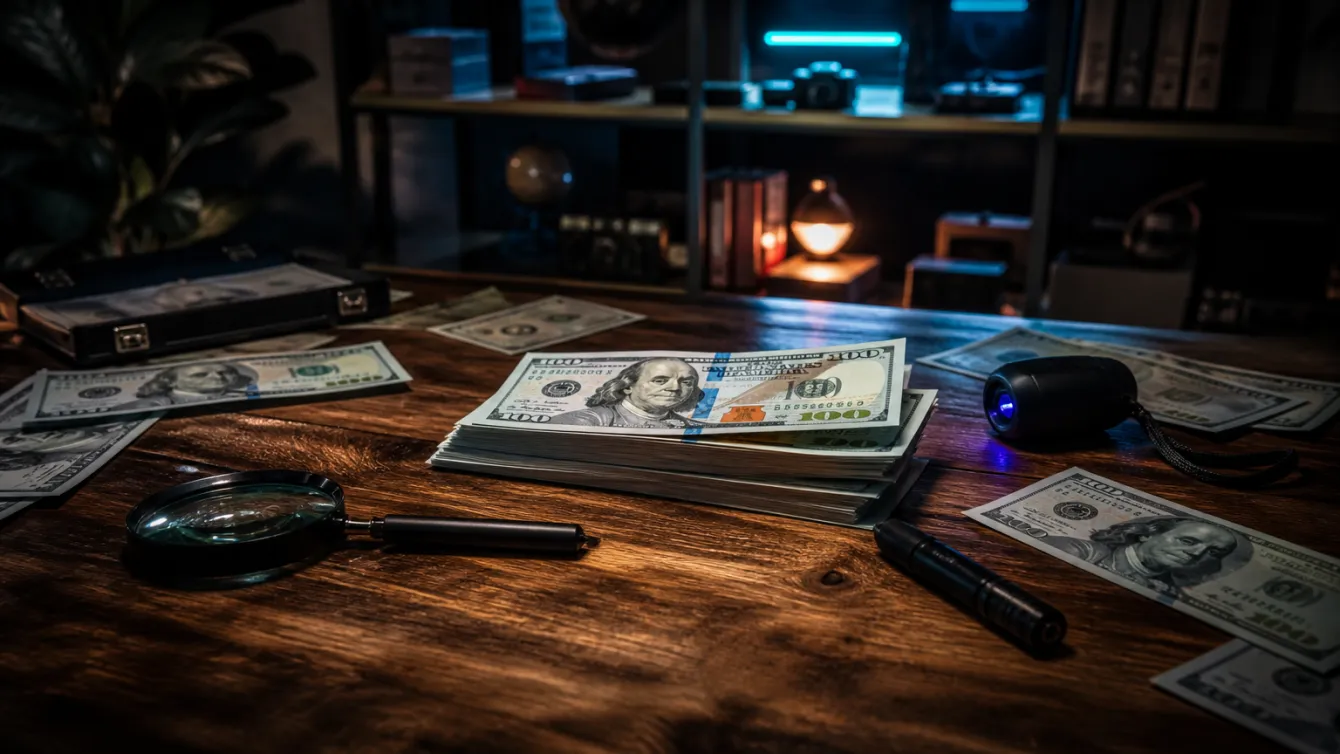
Exploring the features and uses of realistic prop money for production.
Prop money 100 dollar bills are designed for entertainment and production purposes, legally differing in size from genuine currency. They must be printed on one side and include phrases like "For Motion Picture Use Only." Key points include:
Checklist for Evaluating Prop Money Quality and Legality
| Criteria | Details | Legal Requirements | Common Mistakes |
|---|---|---|---|
| Size Variation | Must differ from real bills | >1.5x or <0.75 real size [4] | Using too little for scenes |
| Printing Standards | One-sided printing required | Must not deceive [1] | Not testing camera angles |
| Usage Purpose | Designed for entertainment | Not for real currency [3] | Using in public without notice |
| Security Features | Look for color-shifting ink | Texture and features indicate quality [5] | Using inkjet technology |
| Legal Status | Must not circulate as currency | Should state 'for motion picture purposes' [6] | Altering to imitate legal tender |
What is Prop Money?
Prop money refers to realistic fake currency designed specifically for use in film, theater, or other production settings. Its primary purpose is to create a visual representation of money without the legal implications associated with real currency. Unlike genuine banknotes, prop money must adhere to specific legal standards to avoid confusion with actual currency.
One critical distinction between prop money and counterfeit currency is that prop money is legally manufactured to ensure it cannot be mistaken for real money. According to the Counterfeit Detection Act of 1992, legitimate prop money must be printed on one side and should not closely resemble real currency to the point of deception1. This includes adhering to size regulations; prop bills must be either more than 1½ times or less than ¾ the size of genuine bills4. For example, a $100 prop bill must include clear markings that indicate it is not legal tender, such as the phrase "For Motion Picture Use Only"6.
Legal considerations are paramount when using prop money. While prop money can be legal for entertainment purposes, using it in transactions is illegal. The Secret Service explicitly warns against using prop money to purchase goods or services, regardless of its legality as a prop4. Furthermore, prop money should never circulate among the public and must be collected after filming to prevent any potential legal issues1. Production teams are responsible for ensuring that prop money does not enter commercial circulation and is disposed of appropriately after use1.
In summary, prop money serves as an essential tool in visual storytelling while adhering to strict legal guidelines to distinguish it from counterfeit currency. Understanding these distinctions is crucial for those involved in film production, theater, or any creative project utilizing realistic fake money.
Characteristics of Realistic $100 Bills
Realistic prop money mimics the appearance of genuine $100 bills without crossing legal boundaries. Key characteristics that contribute to the realism of these bills include size, color, and texture. Prop money must adhere to specific size regulations, being either more than 1½ times or less than ¾ the size of real currency4. This ensures that it does not closely resemble actual bills enough to deceive anyone, in line with the Counterfeit Detection Act of 1992, which mandates that prop money must be printed on one side1.
Color is another critical aspect of realistic prop money. Authentic $100 bills feature a distinctive green color, along with various shades and hues that create depth and contrast. Prop money manufacturers strive to replicate this color scheme closely, though they must avoid any elements that would allow them to be mistaken for real currency. For instance, legitimate prop bills often include phrases like "For Motion Picture Use Only," clearly indicating their intended use6.
Texture also plays a significant role in how realistic prop money feels. Genuine currency has a unique texture due to its composition, which includes a blend of cotton and linen. Prop money should ideally be printed on materials that mimic this texture, as inkjet printing is typically insufficient for durability and realism7. The presence of security features, such as color-shifting ink, can enhance the believability of prop money, allowing it to stand up to scrutiny in film and theater productions5.
When selecting prop money for a project, it is essential to ensure that it meets these criteria to avoid common mistakes, such as using insufficient amounts for large scenes or failing to test camera angles for visibility8. Properly assessing the quality and legality of prop money can significantly enhance the authenticity of money-related scenes in film and theater.
Uses of Prop Money
Prop money serves various applications across different fields, primarily in film production, theater, photography, and educational settings. Each use case has specific requirements and considerations to ensure compliance with legal standards and to enhance the visual realism of scenes involving money.
In film and television, prop money is essential for creating realistic financial transactions without using real currency. For example, during a bank heist scene, filmmakers often use realistic fake $100 bills to depict large sums of money being exchanged or stolen. This allows the audience to engage with the story without the risk of legal issues associated with using actual currency. Importantly, prop money must differ in size from real bills, being either more than 1½ times or less than ¾ the size of genuine currency4.
Theater productions also benefit from prop money, particularly in scenes that involve transactions or wealth display. A stage play that revolves around a wealthy character may use prop money to illustrate their affluence visually. In these settings, it's crucial to ensure that the prop money does not resemble real currency closely enough to deceive the audience1.
Photography and advertising campaigns frequently utilize prop money as well. For instance, a photoshoot for a financial institution might feature models handling stacks of prop bills to convey success and wealth. In such scenarios, ensuring the prop money is clearly marked as not legal tender, such as stating "For Motion Picture Use Only," is vital to avoid any legal complications6.
Educational settings can incorporate prop money in teaching scenarios, such as financial literacy courses. Using realistic fake money can help students practice counting, budgeting, and making transactions in a safe environment. However, educators should ensure that the prop money is not used in any way that could confuse students about real currency3.
Overall, prop money is a versatile tool in various creative and educational contexts, but it must be used responsibly to adhere to legal considerations and maintain clarity in its intended purpose.
Where to Buy Realistic $100 Prop Money
Purchasing realistic $100 prop money requires careful consideration of sources to ensure quality and legality. Reputable online retailers and physical stores offer a variety of options, typically ranging from $20 to $100 for bundles of prop money, depending on the quality and quantity.
Online Sources
Amazon: A wide selection of realistic prop money is available, with prices ranging from $25 to $80 for packs of 100 bills. Look for products marked as "for motion picture use only" to ensure compliance with legal standards6.
eBay: Various sellers offer prop money in different denominations. Prices can vary significantly, often ranging from $20 to $60 for a pack of 100 bills. Check seller ratings and reviews to verify quality and reliability.
Specialized Prop Money Websites: Websites like Best Fake Money on Amazon provide dedicated options for prop money. Prices are generally in the $30 to $100 range, depending on the realism and features of the bills.
Physical Stores
Theatrical Supply Stores: Local theatrical or costume supply stores often stock prop money. Prices typically range from $30 to $70 for realistic options. These stores may offer the advantage of inspecting the product before purchase.
Party Supply Stores: Some party supply retailers carry prop money for themed events. Prices can range from $20 to $50, but the quality may vary, so examining the features before buying is crucial.
What to Look For When Purchasing
Legal Compliance: Ensure that the prop money is printed on one side and includes phrases like "For Motion Picture Use Only"16. This confirms it is designed for entertainment purposes and not intended for real transactions.
Size Variation: Verify that the bills differ significantly in size from genuine currency, being either more than 1½ times or less than ¾ the size of real bills4. This is essential for adherence to legal standards.
Durability and Printing Quality: Avoid inkjet-printed money, as it lacks the durability needed for film use7. Look for high-quality printing that includes security features, such as color-shifting ink, to enhance realism5.
User Reviews: Check customer feedback to gauge the quality and realism of the prop money. This can help avoid common mistakes associated with using inadequate prop currency for large scenes8.
By considering these factors and sourcing from reputable suppliers, one can effectively purchase realistic $100 prop money for film, theater, or educational purposes.
Legal Considerations When Using Prop Money
Understanding the legal landscape surrounding prop money is essential for anyone involved in film production, theater, or other creative projects. Prop money must adhere to specific regulations to avoid legal repercussions. According to the Counterfeit Detection Act of 1992, prop money must be printed on one side and designed so that it does not closely resemble real currency to the point of deception1. Additionally, prop bills must differ in size from genuine currency; they should be either more than 1½ times or less than ¾ the size of actual bills4.
Using prop money in transactions, such as purchasing goods or services, is illegal. The Secret Service explicitly warns against this practice, emphasizing that even if prop money is legal for entertainment purposes, its use in commerce can lead to serious legal consequences4. Prop money must never circulate among the public and should be collected and secured after filming to prevent any potential misunderstandings1. It is the responsibility of the production team to ensure that prop money does not enter commercial circulation1.
To avoid legal issues, consider the following tips:
Markings and Phrases: Ensure that prop money includes clear markings such as "For Motion Picture Use Only" to indicate it is not legal tender6. This can help prevent confusion among the public.
Notify Authorities: If using prop money in public settings, notify local law enforcement to avoid potential misunderstandings1. This precaution can prevent unnecessary legal complications.
Educate Your Team: Make sure everyone involved in the production understands the legal implications of using prop money. Educating cast and crew can help mitigate risks associated with misuse.
Store Properly: After filming, store prop money securely and make sure it is not accessible to the public. Proper disposal methods should be followed to prevent any chance of it being mistaken for real currency1.
By adhering to these guidelines and understanding the legal framework surrounding prop money, individuals and teams can effectively utilize this valuable resource without encountering legal issues.
How to Spot Fake Prop Money
Identifying high-quality prop money as opposed to low-quality fakes is crucial for ensuring legal compliance and maintaining realism in film and theater productions. High-quality prop money should not closely resemble real currency enough to deceive, as mandated by the Counterfeit Detection Act of 1992, which requires that it be printed on one side and differ significantly in size from genuine currency1. Specifically, prop money must be either more than 1½ times or less than ¾ the size of real bills4.
When assessing prop money, key characteristics to examine include markings, texture, and printing technology. Authentic prop money typically features phrases such as "For Motion Picture Use Only," clearly indicating its intended use and differentiating it from real currency6. In contrast, low-quality fakes may lack these markings or attempt to imitate them closely, which can lead to legal issues.
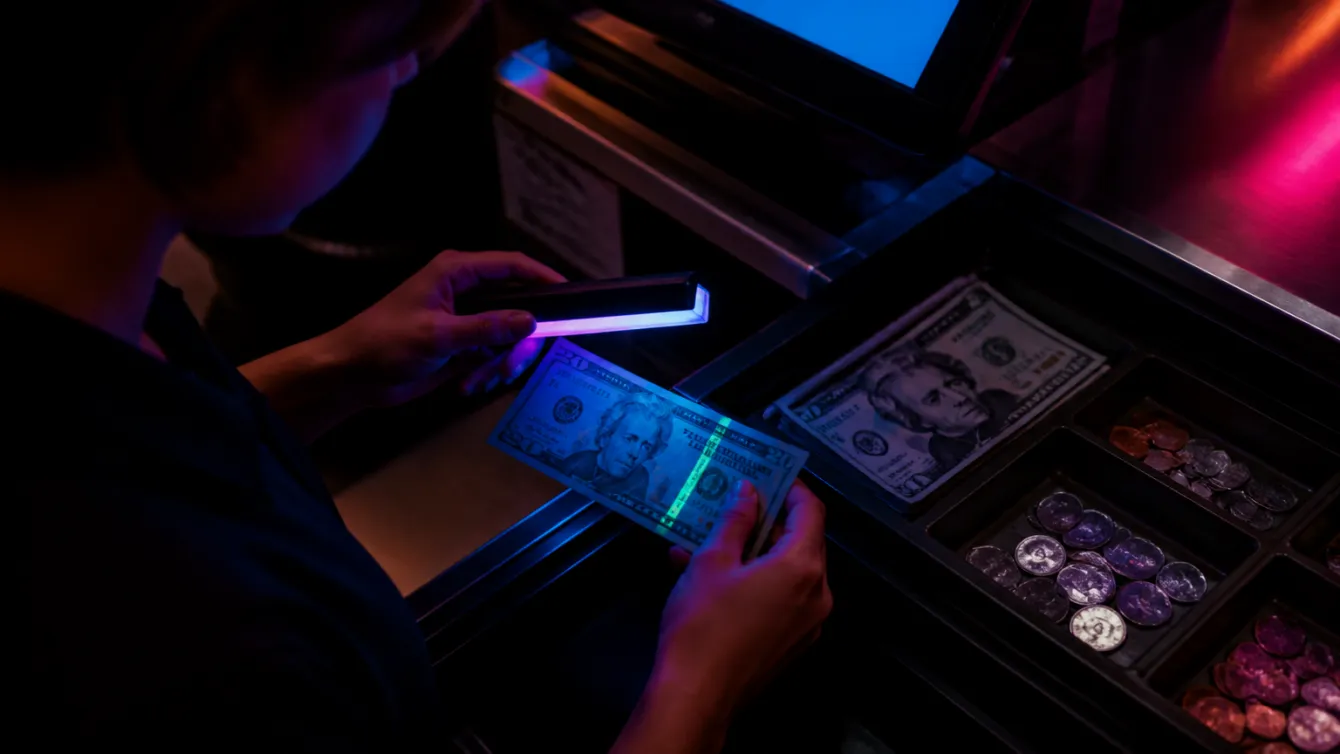
Texture is another important factor. Realistic prop money should be printed on materials that replicate the feel of genuine currency, avoiding inkjet printing, which lacks durability and may not withstand the rigors of filming7. Additionally, high-quality prop money often incorporates security features like color-shifting ink, which can help verify its authenticity5.
To test the authenticity of prop money, consider the following tips:
Examine Size and Shape: Measure the bills to ensure they meet legal size regulations. Any bill that closely matches the dimensions of real currency should be scrutinized further4.
Check for Markings: Look for the phrase "For Motion Picture Use Only" and ensure it is printed on one side. This is a clear indicator of legal compliance1.
Assess the Texture: Feel the material of the bills. High-quality prop money should mimic the texture of real currency, whereas low-quality fakes will often feel flimsy or too glossy.
Inspect for Security Features: Look for color-shifting ink or other security features that are present in genuine currency. If these are absent, the prop money may not be of sufficient quality5.
By following these guidelines, individuals can effectively distinguish between high-quality prop money and low-quality fakes, ensuring both legal compliance and enhanced realism in their projects.
Creative Uses for Prop Money
Prop money, particularly realistic fake $100 bills, offers a range of innovative applications across various events, pranks, and educational settings. Understanding how to creatively utilize prop money can enhance storytelling in film and theater, stimulate learning in educational contexts, and even add humor to social gatherings.
In film and theater productions, prop money is essential for creating authentic scenes involving wealth and transactions. For instance, a bank robbery scene may feature actors handling stacks of prop money to convey the high stakes of the narrative. Properly sized prop money—either more than 1½ times or less than ¾ the size of real bills—ensures compliance with legal standards while enhancing visual storytelling4.
Pranks can also utilize prop money for comedic effect. For example, placing realistic fake $100 bills in an unexpected location, such as a friend’s wallet or car, can lead to humorous reactions when they mistakenly believe they’ve found real cash. However, it's important to ensure that the prop money is clearly marked as not legal tender to avoid misunderstandings6.
In educational settings, prop money serves as an effective tool for teaching financial literacy. Teachers can create real-world scenarios where students practice counting, budgeting, and making transactions. For example, setting up a mock store where students can buy and sell items using prop money allows them to engage in practical learning without the risks associated with real currency3.
Photography and advertising campaigns often incorporate prop money to symbolize wealth and success. A photoshoot for a luxury brand may feature models surrounded by stacks of prop bills, effectively conveying the brand's image. It is crucial that such prop money is labeled appropriately to prevent any legal issues6.
Overall, prop money is a versatile resource that can enhance creative projects, provide educational opportunities, and add an element of fun to social interactions. When using prop money, always consider the legal implications and ensure that it is utilized responsibly and appropriately.
Common Mistakes When Using Prop Money
Using prop money, especially realistic fake $100 bills, can enhance film and theater productions, but common mistakes can lead to legal issues and ineffective scenes. Understanding these pitfalls can help ensure successful and compliant usage.
One frequent error is failing to adhere to legal guidelines. Prop money must be printed on one side and must not closely resemble real currency enough to deceive1. It's essential to use prop money that is either more than 1½ times or less than ¾ the size of actual bills4. Ignoring these guidelines can result in legal repercussions. Always verify that the prop money includes clear markings such as "For Motion Picture Use Only" to avoid confusion and potential legal issues6.
Another common mistake involves using insufficient amounts of prop money for scenes requiring a larger visual impact. For example, a bank heist scene may require a significant number of bills to convey authenticity. Using too few bills can detract from the realism of the scene and may leave the audience unconvinced8. Planning ahead and ensuring that the right quantity of prop money is on hand is crucial for effective storytelling.
Testing camera angles and lighting before filming is often overlooked. Prop money can appear differently under various lighting conditions, and what looks realistic on set may not translate well on screen. Always conduct tests to see how the prop money appears on camera and make adjustments as necessary8.
Additionally, using inkjet technology to print prop money can lead to durability issues during filming7. High-quality prop money should be printed using professional methods that ensure it withstands the rigors of production. This choice is essential for maintaining the visual integrity of the scene.
Finally, using prop money in public without notifying local authorities can lead to misunderstandings and potential legal issues1. Always inform local law enforcement if prop money will be used in public settings to prevent complications.
By avoiding these common mistakes and adhering to legal guidelines, individuals and teams can effectively utilize prop money to enhance their creative projects while minimizing risks.
Common Mistakes and Misconceptions
Ignoring Legal Requirements
Many individuals use prop money without fully understanding the legal requirements surrounding it. Prop money must be printed on one side and should not closely resemble real currency enough to deceive1. Failing to adhere to these regulations can lead to severe legal repercussions, including fines or arrests for misuse of prop money4. Always ensure prop bills meet size regulations, being either more than 1½ times or less than ¾ the size of actual bills4.
Using Insufficient Amounts of Prop Money
A common mistake in film and theater productions is using too little prop money for scenes that require a significant visual impact. For example, a bank robbery scene may necessitate a large quantity of prop bills to create a believable atmosphere8. Insufficient amounts can detract from the realism and leave the audience unconvinced. Planning ahead to ensure the right quantity of prop money is available is essential for effective storytelling.
Overlooking Testing for Camera Angles
Many production teams neglect to test how prop money appears under different camera angles and lighting conditions. Prop money can look different on screen compared to how it appears on set, which can impact its effectiveness in a scene8. Conducting tests prior to filming allows for adjustments to be made, ensuring that the prop money looks realistic and enhances the production.
Printing with Inadequate Technology
Using inkjet technology to print prop money is a frequent error that affects the durability and realism of the bills7. High-quality prop money should be produced using professional printing methods that endure the demands of filming. This choice is crucial for maintaining the visual integrity of scenes involving prop money.
Failing to Notify Authorities When Using in Public
Using prop money in public settings without notifying local law enforcement can lead to misunderstandings and potential legal issues1. It is vital to inform authorities before conducting any scenes involving prop money in public areas to avoid complications and ensure a smoother filming process.
Conclusions
Prop money must adhere to legal guidelines, including being printed on one side and not closely resembling real currency1.
Ensure prop money is either more than 1½ times or less than ¾ the size of actual bills to avoid legal issues4.
Use sufficient amounts of prop money to create a believable visual impact in scenes, especially in high-stakes situations like bank heists8.
Test how prop money appears under various camera angles and lighting conditions to ensure realism on screen8.
Notify local authorities when using prop money in public settings to prevent misunderstandings and potential legal complications1.
For further understanding of prop money regulations, explore What is Fake Prop Money?.
Q&A
Is it a felony to use prop money?
Using prop money as real currency is illegal, and the Secret Service warns that attempting to buy something with prop money can result in felony charges4. However, using prop money for its intended purpose in film, theater, or educational settings is legal as long as it complies with regulations.
Can you legally buy prop money?
Yes, it is legal to buy prop money designed for entertainment, production, or display purposes3. Ensure that the prop money adheres to legal guidelines, such as being marked clearly and not resembling real currency closely enough to deceive.
Are prop bills illegal?
Prop bills are not illegal when used correctly for entertainment or educational purposes3. However, they must differ in size from real currency and include specific markings to avoid legal issues.
What does $1,000,000 look like in $100 bills?
One million dollars in $100 bills consists of 10,000 individual bills. Stacked together, this amount would take up a significant volume, often requiring a large briefcase or box to transport.
How can I tell if my prop money is realistic?
To determine if prop money is realistic, check for size compliance, markings such as 'For Motion Picture Use Only,' and the texture of the bills6. High-quality prop money should not be printed using inkjet technology and should incorporate security features like color-shifting ink75.
Where can I find high-quality prop money?
High-quality prop money can be found through specialized vendors that focus on production supplies for film and theater. Look for sellers that provide clear descriptions of their products, ensuring they meet legal requirements and include necessary markings6.
What are common mistakes when using prop money?
Common mistakes include using insufficient amounts of prop money for impactful scenes, failing to test how it appears on camera, and not adhering to legal guidelines regarding size and markings8. Always plan ahead and ensure compliance to avoid legal issues.
Footnotes
- Do You Need Permission to Use Prop Money on Set? – Prop Movie Money
- $100 New Series Bills - Prop Money
- Is Fake Money Legal? Prop Money Laws Explained
- Arrest for movie ‘prop money’ leads to legal challenge | Miami Herald
- Cashier Toolkit: A Guide to Identifying Genuine Currency 2021 (English)
- $100 RealAged® Prop Money Bills – Realistic Fake $100 Bills for Film
- MOTION PICTURE PROP BANKNOTES (and coins)
- How to Plan a Realistic Money Scene | Prop Money Guide
Discover More About Prop Money
Explore additional resources and insights on prop money usage.