Learn essential tips for spotting fake $100 bills.
To identify a fake $100 bill, check for key security features: the 3-D security ribbon that moves when tilted, a color-shifting bell that changes from copper to green, and a watermark of Benjamin Franklin visible from both sides when held to light. Feel the unique texture of the cotton-linen blend paper, and ensure there are no signs of counterfeit, such as foreign text or missing security features.
Checklist for Identifying Fake $100 Bills
| Feature | Description | How to Check | Notes |
|---|---|---|---|
| 3-D Security Ribbon | Woven into paper, moves when tilted | Tilt the note | Introduced in 2013 [1] |
| Color-Shifting Ink | Changes from copper to green | Tilt the note | Key security feature [2] |
| Watermark | Image of Benjamin Franklin visible from both sides | Hold to light | Visible when held up [2] |
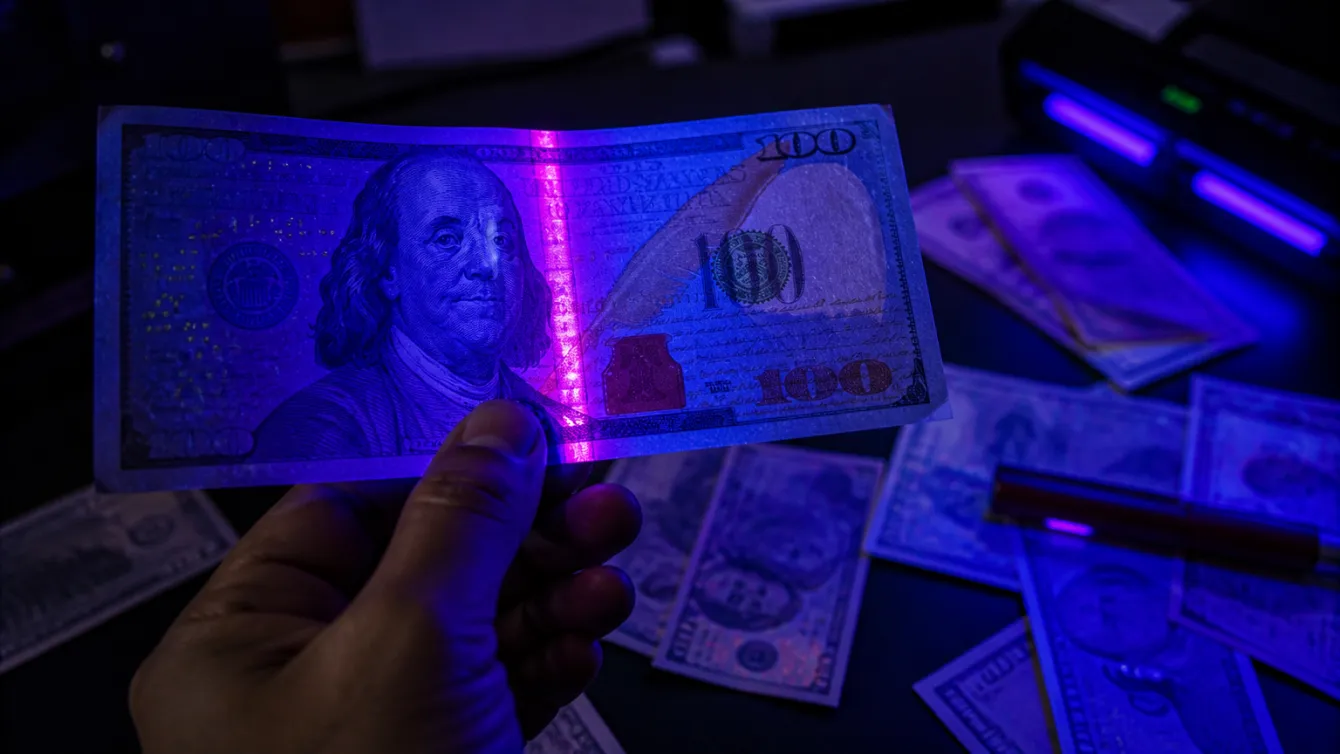
| Security Thread | Glows pink under UV light | Use UV light | Embedded vertically [2] |
| Unique Texture | Cotton-linen blend feel | Feel the paper | 75% cotton, 25% linen [3] |
| Microprinting | Requires magnification to see | Use a magnifying glass | Found in several locations [3] |
| Common Counterfeit Signs | Foreign text, 'For Motion Picture Use Only' | Visual inspection | Lack of security features [4] |
| Counterfeit Detection Pens | Can yield false results | Test the note | Not always reliable [5] |
| Reporting Counterfeits | Notify law enforcement immediately | Contact local authorities | Do not return the note [6] |
Understanding the Security Features of the $100 Bill
The $100 bill includes several advanced security features designed to prevent counterfeiting. These features can be easily checked with basic techniques, ensuring the authenticity of the note.
One prominent security element is the 3-D security ribbon, introduced in 2013. This ribbon is woven into the paper rather than printed, displaying images that shift as the note is tilted1. Another critical feature is the color-shifting ink found in the bell located in the inkwell. When tilted, this ink changes color from copper to green, providing a quick visual verification2.
Additionally, the watermark of Benjamin Franklin is visible from both sides of the bill when held up to light. This faint image serves as a reliable indicator of authenticity2. The security thread is another essential feature; it is embedded vertically in the bill and glows pink under ultraviolet light2.
The texture of the $100 bill also plays a role in its security. Made from a unique blend of 75% cotton and 25% linen, genuine currency has a distinct feel compared to standard paper3.
Microprinting can be found in various locations on the bill and requires magnification to see clearly. This feature helps to further verify the note's legitimacy3.
When inspecting a $100 bill, it is crucial to use multiple methods for authentication. Simply relying on counterfeit detection pens is not advisable, as they can yield false results5. Always feel the paper, tilt the note, and check with light to confirm its authenticity3. If counterfeit currency is suspected, it is essential to report it to local law enforcement and avoid returning the note to the individual who passed it6.
How to Spot Fake $100 Bills: Step-by-Step Guide
Identifying counterfeit $100 bills requires a systematic approach that includes checking the feel, look, and tilt of the note. Here is a practical checklist to help ensure the authenticity of the currency you encounter.
Feel the Paper
The texture of a genuine $100 bill is distinct due to its composition of 75% cotton and 25% linen. This blend gives the currency a unique feel compared to regular paper, which is smooth and flimsy. When handling the bill, it should feel sturdy and have a slight texture that is noticeable3.
Look for Visual Features
Several visual elements are critical in determining the authenticity of a $100 bill:
Watermark: The faint image of Benjamin Franklin should be visible from both sides when held up to light2.
3-D Security Ribbon: This feature is woven into the paper and displays shifting images when tilted. It was introduced in 2013 and is a reliable indicator of a genuine bill1.
Microprinting: This fine text is present in various locations and can only be seen clearly with magnification3.
Color-Shifting Ink: The ink used in the bell icon changes from copper to green when tilted, providing a quick method for visual verification2.
Tilt the Note
Tilting the bill can reveal additional security features:
Color-Shifting Ink: As mentioned, this ink changes colors when the bill is tilted, confirming its authenticity2.
Security Thread: Embedded vertically in the note, this thread glows pink under ultraviolet light, further validating the bill's legitimacy2.
Common Counterfeit Signs
During your inspection, be aware of signs that may indicate a counterfeit bill:
Look for foreign text or phrases like "For Motion Picture Use Only," which are not present on genuine currency4.
Inspect for the absence of security features or any signs of poor printing quality.
Reporting Counterfeits
If you suspect a bill is counterfeit, do not attempt to pass it. Instead, immediately notify local law enforcement and ensure you do not return the note to the individual who gave it to you65. Document a description of the suspect and surrender the note to the authorities6.
By following these steps and using multiple verification methods, individuals can significantly reduce the risk of accepting counterfeit $100 bills.
Common Signs of Counterfeit $100 Bills
Counterfeit $100 bills often lack specific characteristics that distinguish genuine currency. Recognizing these traits is essential for individuals and small business owners to avoid financial loss.
One major indicator of authenticity is the texture of the bill. Genuine $100 notes are made from a unique cotton-linen blend, which gives them a distinct feel compared to regular paper. The composition is 75% cotton and 25% linen, resulting in a sturdier texture that is noticeable upon touch3. Counterfeit bills typically do not replicate this texture accurately, making them feel smoother or flimsier.
Another critical feature is the 3-D security ribbon, which is woven into the paper rather than printed. This ribbon displays shifting images when tilted, a feature introduced in 20131. Counterfeiters often fail to reproduce this element effectively, leading to a flat appearance.
The color-shifting ink used in the bell located in the inkwell is another significant security feature. When the bill is tilted, the ink changes from copper to green, providing a quick visual verification method2. Counterfeit bills may lack this color-shifting property or show inconsistent colors.
The watermark of Benjamin Franklin is also crucial. This faint image should be visible from both sides when held up to light2. Counterfeit notes might feature a poorly printed or absent watermark. Additionally, the security thread embedded vertically in the bill glows pink under ultraviolet light, which counterfeiters often overlook2.
Common counterfeiting techniques include the use of poor-quality printers and the replication of only some security features, leading to inconsistencies in appearance. Signs such as foreign text or phrases like "For Motion Picture Use Only" are clear indicators of counterfeit currency4.
Microprinting, which requires magnification to see, can also aid in authentication. Genuine $100 bills contain microprinting in various locations that counterfeiters typically miss3.
To summarize, when inspecting a $100 bill, check for texture, security features like the 3-D ribbon and color-shifting ink, and the presence of a proper watermark. By being aware of these common signs, individuals can better protect themselves from counterfeit currency.
What to Do If You Receive a Fake $100 Bill
Receiving a counterfeit $100 bill can be concerning, but knowing the appropriate steps to take can help manage the situation effectively. The first action is to avoid returning the bill to the person who passed it. Instead, you should immediately notify local law enforcement. This is crucial because returning the note could implicate you in the transaction, complicating your legal standing6.
When you report the incident, provide as much detail as possible about the individual who handed you the counterfeit bill. This includes a written description of their appearance, clothing, and any identifying characteristics. Such information can assist law enforcement in their investigation6.
Do not attempt to pass the counterfeit bill yourself, as this is illegal and can lead to severe legal consequences, including fines or imprisonment. The Federal Reserve advises that if there is any suspicion of a bill being counterfeit, it should be reported to authorities immediately5.
In addition to notifying law enforcement, it is advisable to document the situation. Take photos of the counterfeit bill if possible, and keep a record of the time, location, and circumstances under which you received it. This information can be helpful for any subsequent investigations.
For small business owners, training employees on how to detect counterfeit currency is essential. Regular educational sessions on identifying security features, such as the color-shifting ink and the 3-D security ribbon, can help prevent accepting fake bills7. This proactive approach reduces the risk of financial loss and enhances overall security within the business.
By taking these steps, individuals and business owners can handle the situation of receiving a counterfeit $100 bill responsibly and legally, while also contributing to broader efforts to combat counterfeiting.
The Importance of Educating Employees on Counterfeit Detection
Training employees to identify counterfeit currency is crucial for businesses to mitigate financial risks. Counterfeit bills, particularly high denominations like the $100 note, can lead to significant losses if not recognized promptly. The $100 bill incorporates advanced security features, such as a 3-D security ribbon and color-shifting ink, which were introduced in 20131. Employees trained in these features can quickly spot discrepancies that indicate a counterfeit note.
Effective employee training programs should cover the various security elements of the $100 bill. For instance, the security thread glows pink under ultraviolet light, and the watermark of Benjamin Franklin is visible when held to light2. Hands-on workshops using real notes can enhance learning, allowing staff to feel the unique texture of the cotton-linen blend3. This tactile experience helps employees distinguish genuine currency from counterfeit bills.
Resources for training can include online courses and workshops provided by organizations like the Federal Reserve, which offer comprehensive guides on currency education7. Additionally, businesses may consider using counterfeit detection tools, although they should be aware of their limitations; for example, counterfeit detection pens can yield false results5. Incorporating multiple verification methods in training ensures that employees are well-prepared to authenticate currency accurately.
Regular refreshers and updates on the latest counterfeiting techniques can also keep employees informed. Training should emphasize the importance of reporting any suspected counterfeit notes to local law enforcement immediately, as this can help prevent further incidents65. By investing in employee education on counterfeit detection, businesses can significantly reduce their vulnerability to financial loss and enhance overall security.
Advanced Techniques for Identifying Counterfeit Bills
In addition to basic verification methods, advanced techniques can enhance the detection of counterfeit $100 bills. One effective method is the use of UV light. Genuine $100 bills feature a security thread that glows pink when exposed to ultraviolet light, providing a quick visual confirmation of authenticity2. This technique is particularly useful in low-light environments, where traditional visual checks may be less effective.
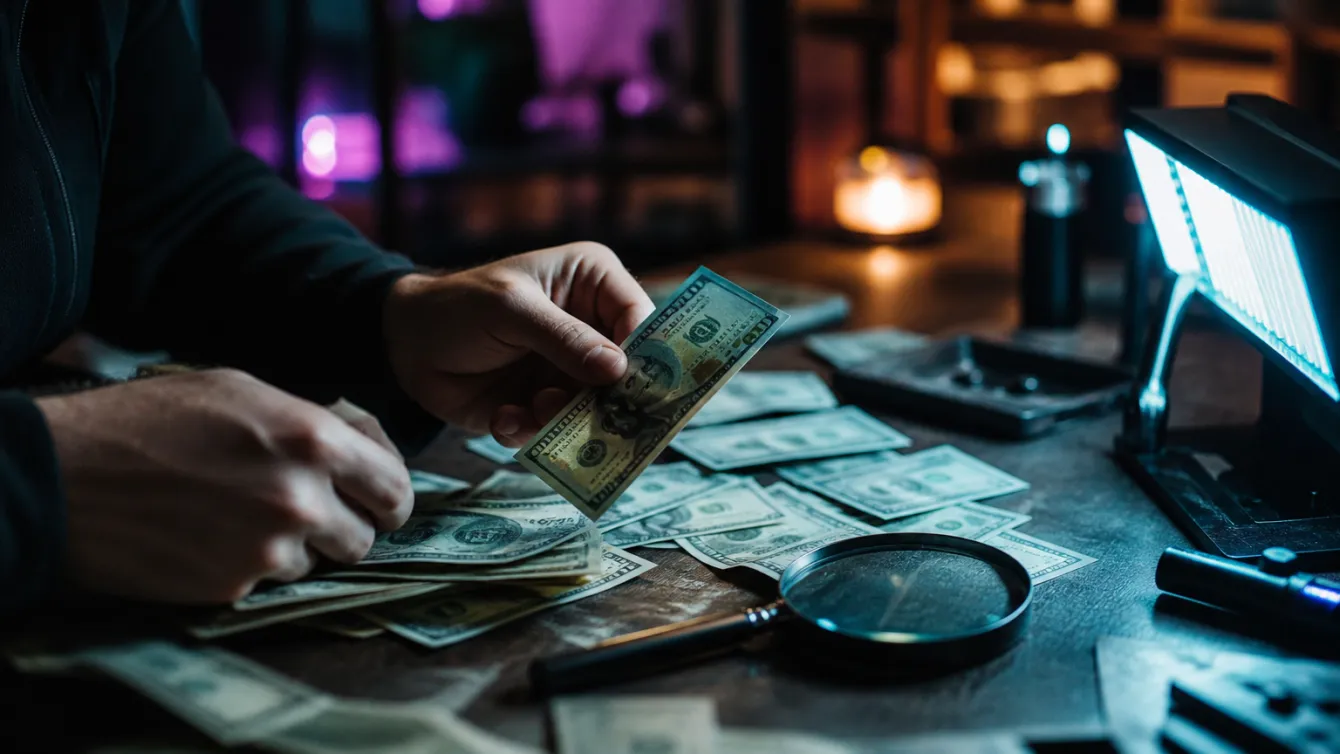
Another advanced method involves the use of magnifying glasses to inspect microprinting on the bill. Genuine currency contains microprinted text in various locations that is only visible under magnification3. Counterfeiters often overlook this detail, making it a reliable indicator of authenticity. When using a magnifying glass, look for words that are clear and crisp, as counterfeit bills may display blurred or missing text.
The $100 bill also incorporates color-shifting ink, which changes from copper to green when tilted2. This feature can be easily tested by tilting the bill back and forth, allowing for quick verification. Additionally, the 3-D security ribbon, introduced in 2013, is woven into the paper, creating a dynamic visual effect when tilted1. This ribbon is another feature that counterfeiters struggle to replicate accurately.
Moreover, training employees on these advanced techniques can significantly reduce the risk of accepting counterfeit bills. A study highlighted that businesses that educate their staff about currency security features are better equipped to identify fake notes7. Implementing regular training sessions and workshops can familiarize employees with the tactile and visual aspects of genuine currency, reinforcing their ability to spot discrepancies.
Incorporating these advanced methods, such as UV light detection and magnification, into standard practices can enhance the effectiveness of counterfeit detection. By employing multiple verification techniques, individuals and businesses can better protect themselves from counterfeit currency.
Debunking Myths About Fake $100 Bills
Misconceptions about counterfeit $100 bills can lead to unnecessary financial risks. One common myth is that all fake money is easy to spot. In reality, counterfeiters often employ sophisticated techniques that replicate security features, making it challenging for the average person to identify fakes. For instance, the $100 note includes advanced features such as a 3-D security ribbon and color-shifting ink, introduced in 2013, which are complex to reproduce accurately1.
Another prevalent belief is that only certain bills are counterfeited, particularly older or lower denominations. However, high-denomination bills like the $100 note are frequently targeted due to their higher value. Counterfeiters often focus on these notes because they yield greater returns on their efforts. This highlights the importance of vigilance, as anyone handling currency can encounter counterfeit $100 bills.
The effectiveness of counterfeit detection pens is also overestimated. Many people believe these tools provide a foolproof method for identifying fake currency. However, these pens can yield false results, leading to the misidentification of genuine bills as counterfeit5. Relying solely on such tools can result in significant losses, especially for small business owners who may accept counterfeit notes without further verification.
Additionally, there is a misconception that counterfeit bills are always of poor quality. While some may exhibit obvious signs of being fake, others can be remarkably well-made. Genuine currency has unique textures and characteristics, such as the cotton-linen blend that comprises 75% cotton and 25% linen, giving it a distinct feel3. Counterfeit bills often fail to replicate these tactile qualities, but they can still appear convincing at first glance.
To effectively combat the risks associated with counterfeit currency, it is crucial to educate oneself and others about the features of genuine bills. Understanding common myths and maintaining a skeptical approach when handling currency can help individuals and businesses protect themselves from financial loss.
Resources for Further Learning
For those seeking to deepen their understanding of counterfeit currency detection, several official resources and educational materials are available. The U.S. Secret Service provides comprehensive guides on identifying counterfeit bills and the proper procedures for reporting suspected counterfeit currency. Their handbook outlines critical actions to take if you encounter counterfeit notes, emphasizing the importance of notifying law enforcement and not returning the bill to the passer6.
The Federal Reserve also offers valuable insights into authenticating U.S. currency. Their resources detail the security features of the $100 bill, including the unique texture of the cotton-linen blend and the advanced security features introduced in 2013, such as the 3-D security ribbon and color-shifting ink12. Utilizing these resources can enhance both individual and business awareness regarding currency security.
In addition to official resources, various educational videos are available online that demonstrate currency security features and counterfeit detection techniques. These videos often include visual comparisons between genuine and counterfeit bills, making it easier to understand what to look for. Engaging with these materials can provide practical knowledge applicable in everyday transactions.
For businesses, incorporating employee training sessions focused on currency education can significantly reduce the risk of accepting counterfeit notes. Training programs should cover essential features like the security thread that glows pink under UV light and the microprinting that requires magnification to detect23. Consistent education and refreshers on the latest counterfeiting techniques can equip employees with the necessary skills to identify fake currency effectively7.
By leveraging these resources, individuals and business owners can enhance their ability to recognize counterfeit currency, ultimately protecting themselves from potential financial loss.
Common Mistakes and Misconceptions
Overreliance on Detection Pens
Many individuals and small business owners believe that counterfeit detection pens are a reliable method for identifying fake currency. However, these pens can yield false results, leading to genuine bills being misidentified as counterfeit5. Relying solely on this tool can result in significant financial losses, as counterfeiters may use high-quality reproductions that pass the pen test. A more effective approach involves combining multiple verification methods, such as tactile checks and visual inspections.
Assumption That All Counterfeit Bills Are Obvious
A common misconception is that all counterfeit bills are easy to spot due to obvious flaws. In reality, counterfeiters often replicate security features with impressive accuracy, making it difficult for the average person to identify fakes1. This assumption can lead to complacency, increasing the risk of accepting counterfeit notes. Understanding the specific security features of genuine currency, such as the 3-D security ribbon and color-shifting ink, is essential for accurate identification.
Neglecting Employee Training
Businesses often underestimate the importance of training employees on how to identify counterfeit currency. Without proper education, staff may struggle to recognize subtle differences between real and fake bills, which can lead to financial losses7. Regular training sessions that cover the advanced security features of the $100 bill, such as the security thread that glows under UV light, can enhance employee vigilance and reduce the likelihood of accepting counterfeit notes.
Belief That Only Older Bills Are Counterfeited
There is a widespread belief that counterfeiters primarily target older or lower denominations of currency. In fact, high-denomination bills like the $100 note are frequently counterfeited due to their higher value, making them attractive to criminals1. This misconception can lead individuals and businesses to overlook the need for vigilance when handling all denominations. Awareness and education about the risks associated with counterfeiting can help mitigate this issue.
Underestimating the Quality of Counterfeit Bills
Some people assume that counterfeit bills are always of poor quality and easy to identify. While many counterfeit notes do exhibit obvious flaws, others can be remarkably well-made and difficult to distinguish from genuine currency3. This oversight can result in unsuspecting individuals accepting fake bills without proper verification. Familiarizing oneself with the unique textures and security features of genuine currency is crucial for effective detection.
Conclusions
Always inspect for security features, including the color-shifting ink and the 3-D security ribbon.
Use UV light to check for the security thread that glows pink, especially in low-light conditions.
Train employees on detecting counterfeit bills to enhance vigilance and reduce financial risks.
Be skeptical of counterfeit detection pens, as they can produce false results; combine methods for better accuracy.
Recognize that high-denomination bills like the $100 note are frequently targeted by counterfeiters.
For further insights into counterfeit currency detection, explore Counterfeit Dollar Bills: How to Recognize Them.
Q&A
How to tell if a $100 dollar bill is counterfeit?
To determine if a $100 bill is counterfeit, examine its security features. Genuine bills include a 3-D security ribbon that moves when tilted, color-shifting ink that changes from copper to green, and a watermark of Benjamin Franklin visible from both sides when held to light12. Additionally, feel the unique texture of the cotton-linen blend, which differs from regular paper3.
Are there fake $100 bills that look real?
Yes, counterfeit $100 bills can look remarkably real due to sophisticated printing techniques. Counterfeiters often replicate security features, making it challenging for individuals to identify fakes without proper knowledge1. This emphasizes the need for vigilance when handling currency.
Does every $100 bill have a blue stripe?
Not every $100 bill has a blue stripe, but the current series does feature a 3-D security ribbon woven into the paper, which is a key security feature introduced in 20131. This ribbon is distinct and difficult for counterfeiters to replicate accurately.
What to do if you receive a fake $100 bill?
If you suspect that you have received a counterfeit $100 bill, immediately notify local law enforcement and do not return the note to the person who passed it6. Providing a written description of the individual can aid in the investigation.
What are the security features of a $100 bill?
The security features of a $100 bill include a color-shifting ink that changes from copper to green, a security thread that glows pink under UV light, and microprinting that requires magnification to see clearly232. Additionally, the bill has a unique texture due to its cotton-linen blend and a watermark of Benjamin Franklin.
How can businesses protect themselves from counterfeit bills?
Businesses can protect themselves from counterfeit bills by educating employees on the security features of currency and implementing regular training sessions7. Utilizing multiple verification methods, such as tactile checks, visual inspections, and UV light, enhances the ability to identify fake notes.
What are common signs of counterfeit currency?
Common signs of counterfeit currency include the presence of foreign text, the phrase 'For Motion Picture Use Only', and a lack of security features such as the 3-D security ribbon and color-shifting ink4. Additionally, counterfeit bills may feel different due to inferior paper quality.
Footnotes
- Teller Toolkit: A guide to identifying genuine currency
- $100 Note
- Dollars in Detail: Your Guide to U.S. Currency
- Learn How to Spot Fake Money Before it Reaches Your Wallet
- The Fed - How do I determine if a banknote is genuine?
- US Secret Service Handbook on Counterfeit Currency
- Decoding Dollars $100 | U.S. Currency Education Program
Explore More on Currency Protection
Discover additional resources to safeguard against counterfeits.