Identifying counterfeit dollar bills is crucial for small businesses.
To recognize counterfeit dollar bills, examine security features like the watermark and security thread. This process takes a few seconds per note. Success relies on checking multiple features, as counterfeit detection pens may yield false results. If a note is suspected to be counterfeit, report it to local authorities and store it separately from genuine currency.
What You'll Need
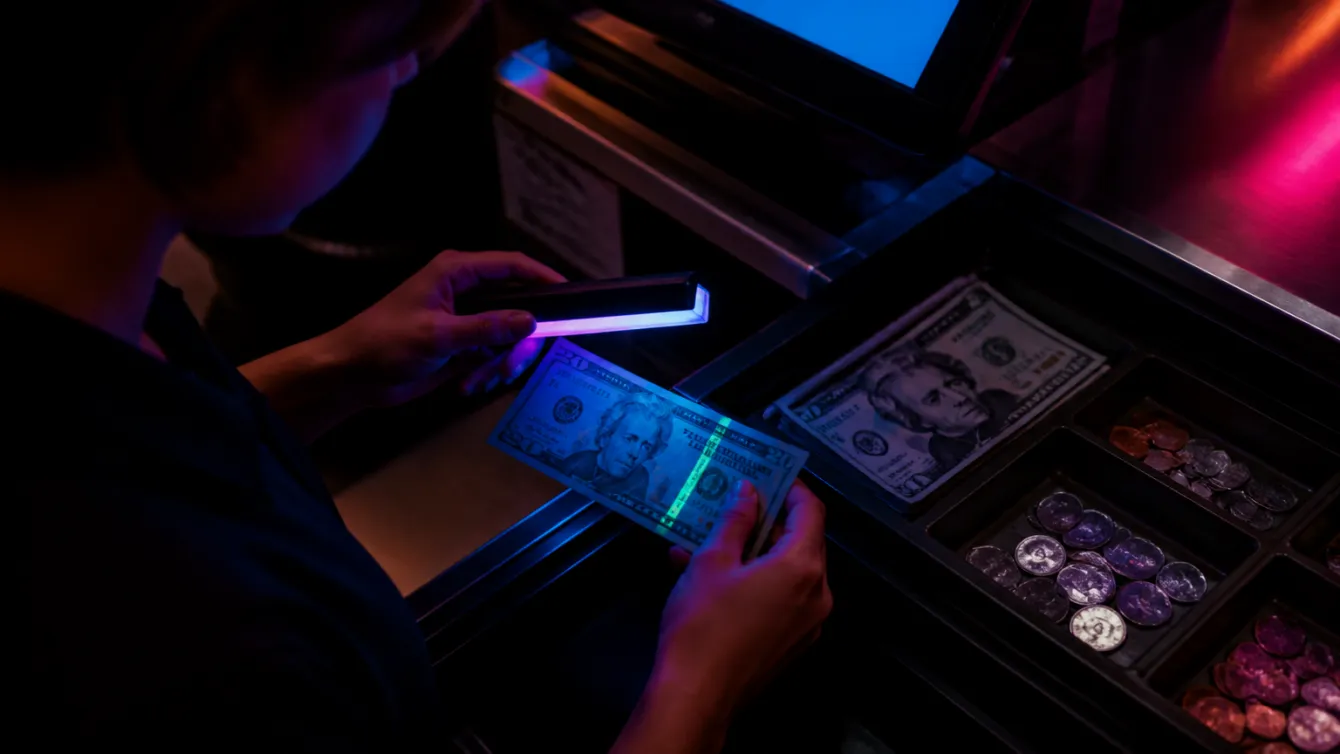
UV Light
This tool helps to reveal the security features embedded in genuine dollar bills.
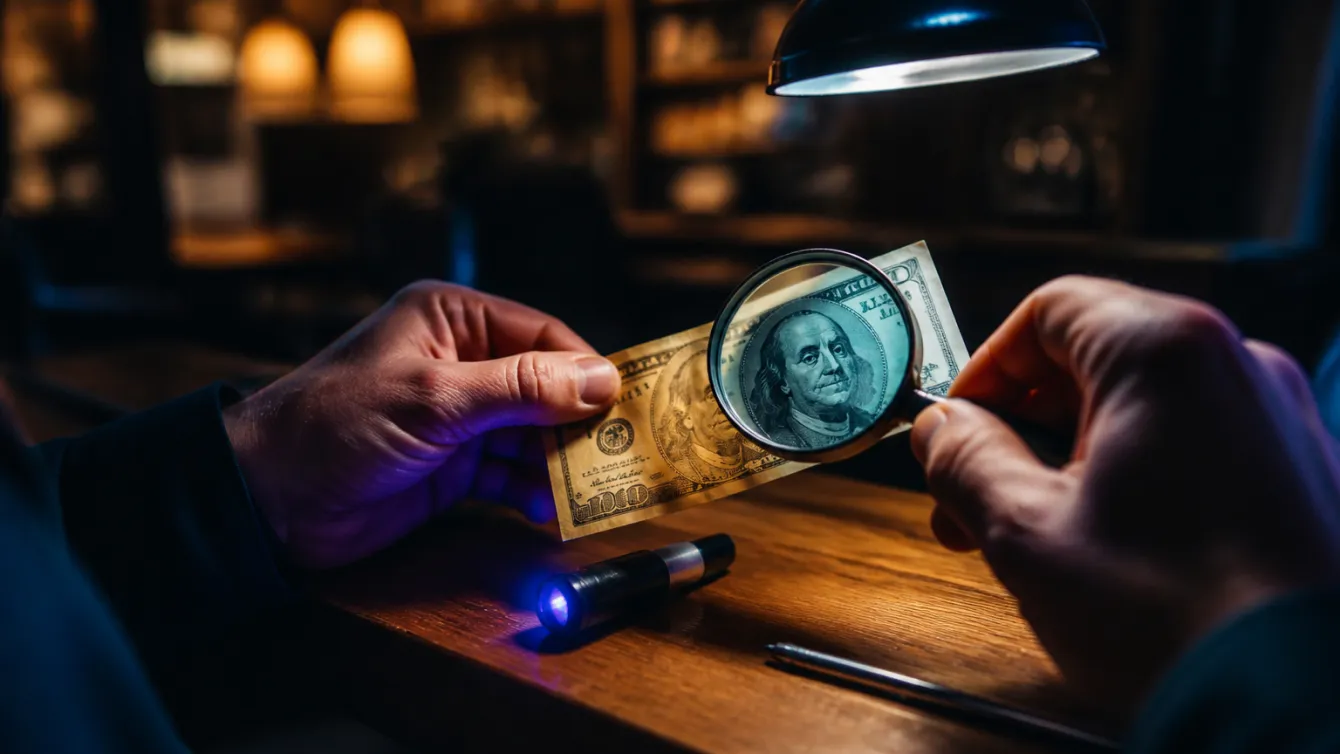
Magnifying Glass
A magnifying glass allows for close inspection of fine details that may indicate counterfeiting.
Color Comparison Chart
This chart assists in verifying the correct colors of different denominations of bills.
Access to Online Resources
Websites provide up-to-date information on security features and counterfeit detection methods.
Time for Inspection
Taking time to carefully examine bills increases the chances of identifying counterfeits.
Training Materials
Educational resources can enhance understanding of the security features present in real currency.
Counterfeit Dollar Bills: How to Recognize Them
- Step 1: Examine the Paper
Check the texture of the bill. Genuine U.S. currency is made from a blend of 75% cotton and 25% linen, giving it a distinct feel. If the bill feels too smooth or too flimsy, it may be counterfeit1.
- Step 2: Check the Watermark
Hold the bill up to the light to see the watermark. Genuine notes feature a watermark that matches the portrait on the bill, visible from both sides. If the watermark is missing or appears different, the bill may not be authentic2.
- Step 3: Look for the Security Thread
Inspect the bill for a security thread embedded in the paper. This thread is visible when held up to light and is usually located to the right of the portrait. If the thread is missing or appears printed on the surface, the bill is likely counterfeit2.
- Step 4: Analyze the Microprinting
Use a magnifying glass to check for microprinting on the bill. Genuine notes have microprinted text in various locations, which is difficult to replicate. If the text appears blurry or is missing, it may indicate a counterfeit1.
- Step 5: Check for Color-Shifting Ink
Tilt the bill to observe the color-shifting ink on the lower right corner. Genuine bills change color from green to black when tilted. If there is no noticeable change, the bill may be counterfeit2.
- Step 6: Look for Foreign Markings
Inspect the bill for any foreign writing or markings. Counterfeit notes often have phrases like 'For Motion Picture Use Only' or 'Replica' printed on them. If such markings are present, the bill is not genuine3.
- Step 7: Use Multiple Features
Rely on a combination of security features to verify authenticity. Counterfeit detection pens can be unreliable and may yield false results, so it is crucial to check multiple features2.
- Step 8: Report Suspicion
If you suspect you have a counterfeit bill, do not attempt to use it. Notify local police and store the note separately from genuine currency. This action helps prevent further circulation of counterfeit bills2.
- Step 9: Educate Your Staff
If you own a business, train your employees on how to recognize counterfeit bills. Regular training sessions can help reduce the risk of accepting counterfeit currency during transactions.
What Are Counterfeit Dollar Bills?
Counterfeit dollar bills are fake currency designed to resemble genuine U.S. currency in order to deceive individuals and businesses. The implications of accepting counterfeit money can be severe, leading to financial loss for businesses and legal consequences for individuals involved in its circulation. In fiscal year 2023, the U.S. Secret Service recorded $102 million in counterfeit currency passed in the United States, highlighting the scale of this issue4.
Approximately 1 in 80,000 genuine notes is estimated to be counterfeit, with about $15 million in counterfeit notes actively circulating at any given time5. This prevalence underscores the importance of being vigilant when handling cash. Counterfeit bills can appear in various forms, often lacking essential security features that are present in authentic currency. Identifying these features, such as the watermark and security thread, is crucial for verification2.
The economic impact of counterfeit currency extends beyond individual losses. Businesses that unknowingly accept counterfeit bills may face significant financial setbacks, particularly small businesses that operate on tight margins. Under U.S. law, dealing in counterfeit obligations can result in a fine or imprisonment for up to 20 years, emphasizing the seriousness of this criminal activity6.
To mitigate the risks associated with counterfeit currency, it is advisable for individuals and businesses to familiarize themselves with the common security features of genuine bills. This knowledge can aid in quickly identifying counterfeit notes and protecting financial interests. If a counterfeit bill is suspected, it is essential to notify local authorities and store the note separately from genuine currency to prevent further circulation2.
Key Security Features of Genuine Dollar Bills
Identifying genuine dollar bills relies heavily on their unique security features. Two of the most significant features are the watermark and the security thread. The watermark is a recognizable image embedded into the paper, which should match the portrait on the bill and be visible when held up to light. If the watermark is absent or does not match, the bill is likely counterfeit2. The security thread, a thin strip embedded in the bill, is also visible when held to the light and can be found to the right of the portrait. If the thread is missing or appears printed on the surface, this indicates a counterfeit note2.
Microprinting is another critical security feature found on denominations of $5 and higher. Genuine bills contain microprinted text in various locations that are difficult for counterfeiters to replicate. If the text appears blurry or is absent, it is a strong indicator of a counterfeit bill1. Additionally, the texture of U.S. currency is distinctive, made from a blend of 75% cotton and 25% linen, which gives it a unique feel. Counterfeit bills often lack this authentic texture, feeling smoother or flimsier than genuine notes1.
When examining bills, it is essential to check for color-shifting ink, particularly in the lower right corner, which changes from green to black when tilted. A lack of this color shift can signal a counterfeit2. Lastly, be alert for any foreign writing or markings that indicate the bill is not genuine, such as "For Motion Picture Use Only" or "Replica," which are common in counterfeit notes3.
In cases where a counterfeit bill is suspected, it is crucial to notify local authorities and store the note separately from genuine currency to prevent further circulation2. Familiarity with these security features can significantly reduce the risk of accepting counterfeit currency, protecting both individuals and businesses from potential financial losses.
How to Recognize Counterfeit Dollar Bills
Identifying counterfeit dollar bills requires a combination of visual cues and tactile checks. Awareness of the various security features present in genuine currency is essential. In 2023, the U.S. Secret Service recorded $102 million in counterfeit currency, emphasizing the importance of vigilance4.
When examining a bill, start with the texture. Genuine U.S. currency is composed of 75% cotton and 25% linen, which gives it a distinct feel1. If a bill feels too smooth or flimsy, it may be counterfeit. The watermark is another critical feature; it should match the portrait on the bill and be visible when held up to light2. If the watermark is missing or appears different, that’s a strong indication of a fake.
The security thread, located to the right of the portrait, should be visible when the bill is held to light. If it appears printed on the surface, the bill is likely counterfeit2. In addition, microprinting on denominations of $5 and higher can help in authentication; if the text is blurry or absent, that could indicate a counterfeit1.
For practical checks, counterfeit detection pens can be unreliable and may provide false results2. It is advisable to use multiple security features to verify authenticity. If suspicion arises, report the note to local authorities and store it separately from genuine currency2.
In retail environments, training staff on recognizing counterfeit bills can significantly reduce the risk of acceptance. Regular training sessions ensure employees are equipped with the knowledge necessary to identify counterfeits effectively.
Common Types of Counterfeit Bills
The most frequently counterfeited denominations in the United States are the $20, $50, and $100 bills. These bills are often targeted due to their higher value, making them more attractive for counterfeiters. In fiscal year 2023, the U.S. Secret Service recorded a staggering $102 million in counterfeit currency passed in the United States, highlighting the ongoing challenge of identifying fake bills4. Approximately 1 in 80,000 genuine notes is estimated to be counterfeit, with around $15 million in counterfeit notes actively circulating at any given time5.
Counterfeit bills can be produced using various methods, including high-quality printing techniques that mimic the appearance of genuine currency. Counterfeiters may use specialized printers and paper that closely resembles the unique texture of U.S. currency, which is a blend of 75% cotton and 25% linen1. However, many counterfeit notes lack the essential security features that genuine bills possess, such as the watermark and security thread, making them identifiable upon close inspection2.
Notable cases of counterfeiting include the infamous "Supernote," a highly sophisticated counterfeit $100 bill that emerged in the early 2000s. This counterfeit was notable for its use of advanced printing techniques that made it nearly indistinguishable from real currency. Law enforcement agencies have since improved detection methods, but counterfeiters continue to adapt their techniques to evade capture.
If counterfeit currency is suspected, individuals should not attempt to use it. Instead, they should notify local authorities and store the note separately from genuine currency to prevent further circulation2. Being aware of the common types of counterfeit bills and the methods used to produce them is crucial for both consumers and business owners to safeguard against financial losses.
What to Do If You Receive a Counterfeit Bill
Receiving a counterfeit bill can be a troubling experience for both individuals and business owners. It is crucial to handle the situation carefully to minimize potential losses and legal implications. First, if a counterfeit bill is suspected, do not attempt to use it in any transactions. This action could lead to legal consequences, including fines or imprisonment for up to 20 years under U.S. law6.
Notify local authorities immediately. Reporting the incident helps prevent further circulation of the counterfeit bill and assists law enforcement in tracking down counterfeiters. Store the suspected counterfeit note separately from genuine currency to avoid confusion during future transactions2. This practice is essential, especially for businesses that handle cash frequently.
For business owners, it is also important to communicate with customers if they receive a counterfeit bill during a transaction. Explain the situation calmly and professionally, emphasizing that the acceptance of counterfeit currency is a serious issue. This transparency can help maintain customer trust and prevent further disputes.
In cases where counterfeit bills are detected, training employees on identification methods can be beneficial. Regular staff training sessions ensure that employees are well-equipped to recognize counterfeit notes, reducing the risk of accepting them in the future. Additionally, consider keeping a record of counterfeit incidents to analyze patterns and improve detection strategies.
Counterfeit currency poses a significant threat, with approximately $15 million in counterfeit notes circulating at any given time5. Taking proactive measures and staying informed about the characteristics of genuine currency can help mitigate risks associated with counterfeit bills.
Preventing Counterfeit Transactions in Your Business
Businesses must take proactive measures to safeguard against accepting counterfeit dollar bills. One of the most effective strategies is to train staff on identifying counterfeit notes and understanding the security features of genuine currency. Regular training sessions can equip employees with the knowledge to recognize key indicators, such as the watermark, security thread, and microprinting, which are critical for verification21.
In addition to staff training, utilizing detection tools can enhance security. While counterfeit detection pens are available, they are not always reliable and may yield false results2. It is advisable to employ multiple verification methods, including visual checks of security features and tactile assessments of the bill's texture, which is a blend of 75% cotton and 25% linen in genuine currency1.
For businesses that handle cash frequently, implementing a routine for checking bills upon receipt can significantly reduce the risk of accepting counterfeit currency. Establishing a clear protocol for what to do if a counterfeit bill is suspected is essential. Employees should know to notify local authorities immediately and keep any suspected counterfeit notes separate from genuine currency2.
In situations where counterfeit bills are detected, transparent communication with customers is crucial. Clearly explaining the issue can help maintain trust and prevent disputes. Keeping a record of counterfeit incidents can also provide valuable insights into common patterns and inform future training sessions.
Understanding the prevalence of counterfeit currency, with approximately $15 million in counterfeit notes actively circulating at any given time5, emphasizes the need for vigilance in cash transactions. By implementing these strategies, businesses can better protect themselves from financial losses associated with counterfeit bills.
Legal Implications of Counterfeit Currency
Using counterfeit currency carries serious legal consequences. Under U.S. law, dealing in counterfeit obligations can lead to fines or imprisonment for up to 20 years6. This highlights the severity with which the legal system addresses counterfeiting, emphasizing the importance of avoiding any involvement with counterfeit money.
In fiscal year 2023, the U.S. Secret Service reported a staggering $102 million in counterfeit currency passed in the United States4. This figure underscores the scale of the problem and the ongoing efforts to combat counterfeiting. Individuals caught using or distributing counterfeit bills may face prosecution, which can result in significant legal fees and long-term implications on personal records.
Statistics show that approximately 1 in 80,000 genuine notes is estimated to be counterfeit, which translates to about $15 million in counterfeit notes circulating at any given time5. This prevalence means that both consumers and businesses must remain vigilant. If someone unknowingly accepts a counterfeit bill, they could inadvertently become involved in legal issues if they attempt to use it again.
When a counterfeit bill is suspected, individuals should report it to local authorities immediately. This action not only helps in tracking down counterfeiters but also protects the individual from potential legal repercussions. Storing the suspect note separately from genuine currency is critical to avoid confusion and further complications2.
In summary, the legal ramifications of counterfeit currency are significant, and awareness of the laws surrounding it is essential for both individuals and businesses. Taking proactive measures to identify and report counterfeit bills can mitigate risks and prevent legal troubles.
Innovative Technologies to Combat Counterfeiting
Emerging technologies are playing a crucial role in combating counterfeiting, especially as the prevalence of fake currency rises. In fiscal year 2023, the U.S. Secret Service recorded $102 million in counterfeit currency passed in the United States, highlighting the urgent need for innovative solutions4. One significant advancement is the development of digital currency, which can reduce the reliance on physical cash and its associated risks. Digital currencies utilize blockchain technology, providing a secure and traceable method for transactions, thereby minimizing opportunities for counterfeiters.
Advanced detection tools are also being developed to enhance the identification of counterfeit bills. These tools may incorporate sophisticated imaging technologies and artificial intelligence algorithms to analyze banknotes more effectively than traditional methods. For instance, while counterfeit detection pens are commonly used, they are not always accurate and may yield false results2. Newer technologies aim to improve reliability by leveraging multiple security features, such as watermarks and microprinting, which are critical for verifying authenticity21.
However, the implementation of these technologies is not without challenges. For businesses, the transition to digital currency may require significant investment in infrastructure and training. Additionally, the effectiveness of detection tools can vary, and businesses must remain vigilant in their cash handling practices. In cases where counterfeit notes are suspected, it is essential to notify local authorities and store the note separately from genuine currency to prevent further circulation2.
As counterfeiters continue to evolve their methods, staying informed about these innovative technologies and their limitations is vital for both consumers and business owners. Engaging in continuous education and adopting new tools can significantly enhance defenses against counterfeiting.
What to Do If It Doesn’t Work Out
Difficulty Identifying Security Features
Many individuals struggle to recognize the security features of genuine currency, leading to mistakes in identifying counterfeit bills. To improve identification skills, review resources that detail the specific security features of each denomination, such as the watermark, security thread, and color-shifting ink. Familiarizing oneself with these features can enhance confidence and accuracy in detecting counterfeits.
Inconsistent Employee Training
Businesses may find that their employees are not consistently trained on how to identify counterfeit bills, resulting in confusion and potential losses. Implementing regular training sessions that include hands-on practice with real and counterfeit notes can strengthen employee knowledge. Additionally, providing visual aids and quick-reference guides can support ongoing learning and reinforce skills.
Over-reliance on Detection Tools
Relying solely on detection tools, such as counterfeit pens, can lead to false confidence and errors in judgment. It is essential to combine the use of detection tools with thorough visual and tactile inspections of the bills. Educating staff about the limitations of these tools will help them understand the importance of a multi-faceted approach to verification.
Insufficient Reporting Protocols
In some cases, businesses might lack clear procedures for reporting and handling suspected counterfeit bills. Establishing a straightforward protocol can streamline responses and minimize risks. Ensure that all employees know the steps to take when they encounter a counterfeit bill, including notifying local authorities and documenting the incident.
Lack of Customer Communication
When a counterfeit bill is detected, failing to communicate effectively with customers can lead to misunderstandings and damage trust. Training employees to handle such situations with transparency and professionalism is crucial. Clearly explaining the situation and the importance of avoiding counterfeit currency can help maintain customer relationships and prevent disputes.
Conclusions
Recognize key security features of genuine currency, including watermarks and microprinting, to effectively identify counterfeit bills.
Implement regular training sessions for employees to enhance their skills in detecting counterfeit notes and understanding verification methods.
Utilize a combination of detection tools and manual inspections to increase accuracy in identifying counterfeit currency.
Establish clear protocols for reporting suspected counterfeit bills to ensure swift action and minimize risks.
Maintain transparent communication with customers regarding counterfeit incidents to preserve trust and prevent disputes.
To further enhance understanding of counterfeit currency, explore our guide on How to Spot a Fake 20 Dollar Bill.
Q&A
How can I tell if a dollar bill is counterfeit?
To determine if a dollar bill is counterfeit, examine its security features such as the watermark, security thread, and microprinting. Genuine bills have a unique texture made from a blend of 75% cotton and 25% linen, which can also help in identification21.
What does a counterfeit 1 dollar bill look like?
A counterfeit 1 dollar bill may lack the security features present in genuine currency, such as the watermark and security thread. Additionally, it might have foreign writing or markings indicating 'For Motion Picture Use Only' or 'Replica'3.
Which dollar bill is most counterfeited?
The $100 bill is the most counterfeited denomination in the United States, largely due to its high value and the complexity of its security features. Counterfeiters often target higher denominations as they yield greater returns5.
Will banks replace fake money?
Banks will not replace counterfeit money. If someone unknowingly presents counterfeit currency, it is typically confiscated, and the individual may be advised to report it to local authorities2.
How to detect counterfeit money $100?
To detect counterfeit $100 bills, check for security features such as the 3D security ribbon, the watermark of Benjamin Franklin, and the color-shifting ink. Additionally, feel the texture of the bill, which should be made from a cotton-linen blend21.
What should I do if I receive counterfeit money?
If you receive a counterfeit bill, you should notify local police immediately and store the note separately from genuine currency to avoid confusion. Reporting the incident helps authorities track counterfeiters and prevents further circulation of fake money2.
Is it illegal to accidentally spend counterfeit money?
Yes, it is illegal to spend counterfeit money, even if done unknowingly. Under U.S. law, dealing in counterfeit obligations can result in severe penalties, including fines and imprisonment6.
Footnotes
- Dollars in Detail: Your guide to U.S. currency
- How do I determine if a banknote is genuine ... - Federal Reserve
- Cashier Toolkit
- Estimating the Volume of Counterfeit U.S. Currency in Circulation
- Fall in US Counterfeits, Says New Report | Currency News™
- 18 USC 473: Dealing in counterfeit obligations or securities
Explore More on Currency Security
Discover additional resources to enhance your knowledge.