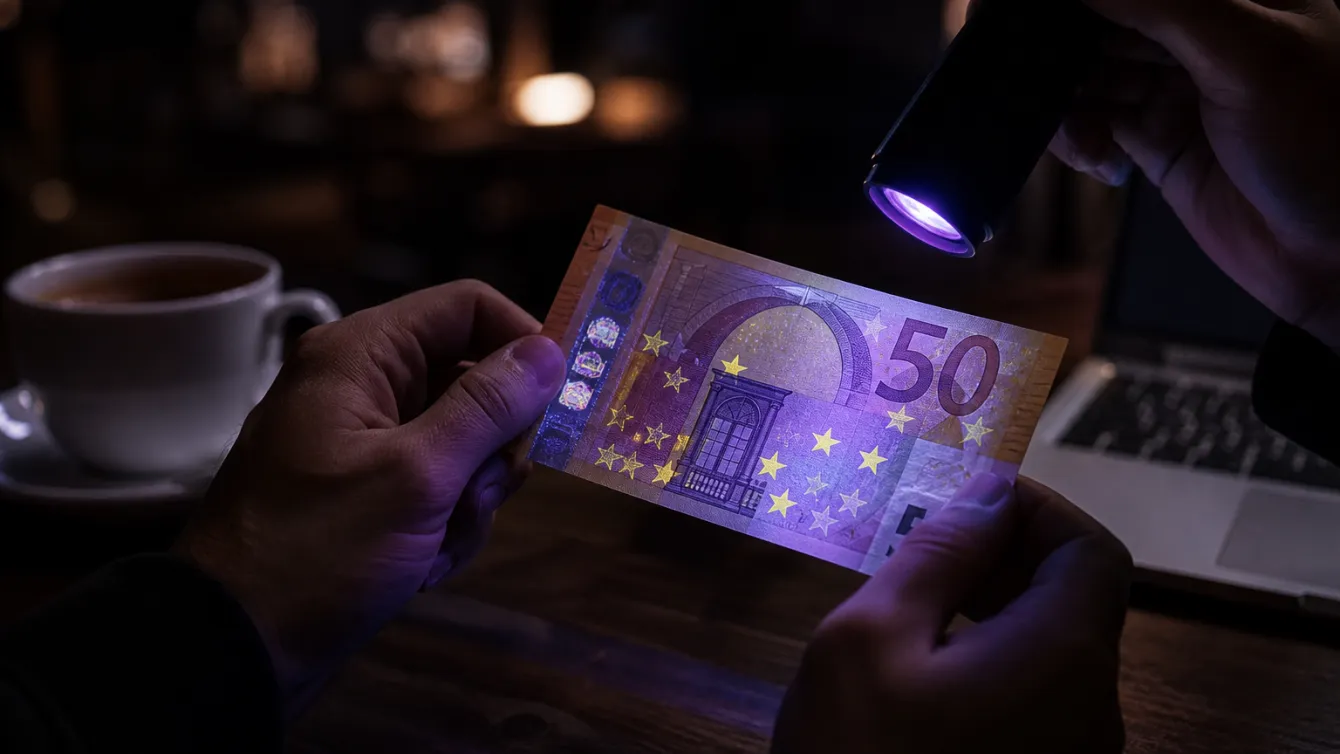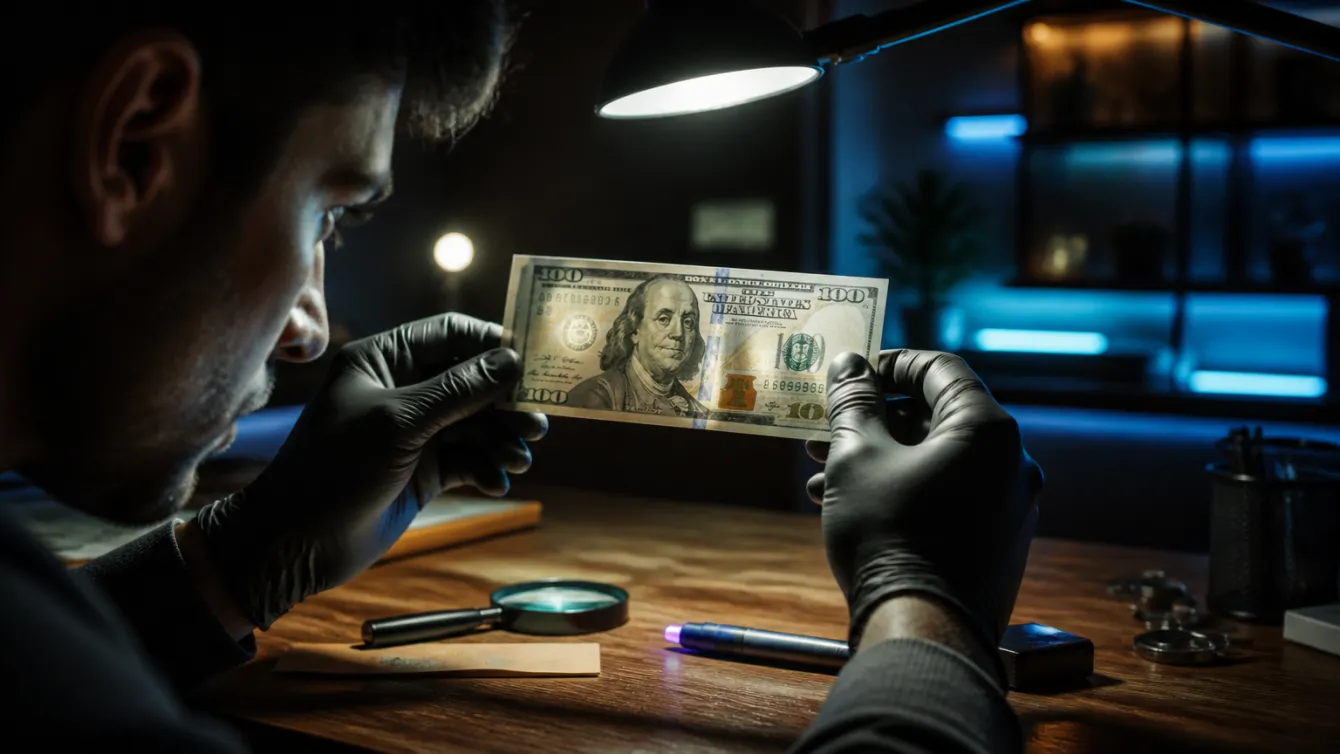
An officer analyzes counterfeit currency to understand its implications.
Counterfeiting currency involves the illegal reproduction of money with the intent to deceive. In the United States, it is estimated that about $30 million in counterfeit notes exist, representing roughly 1 in 40,000 notes. Key points include:
Counterfeiters often use digital technology for reproduction.
Convictions can lead to sentences of up to 20 years in prison.
Effective anti-counterfeiting measures involve prevention, repression, training, and cooperation.
Counterfeiting Currency: Key Facts and Identification Checklist
| Fact | Details | Source | Identification Checklist |
|---|---|---|---|
| Counterfeit Rate | 1 in 40,000 notes | [1] | Check for security features |
| Historical Counterfeiting | $250,000 in 1921 UK | [2] | Examine paper texture |
| Prison Sentence | Up to 20 years | [3] | Look for color shifting ink |
| Average Sentence | 17 months for convictions | [4] | Inspect microprinting |
| Counterfeit Techniques | Digital scanners and inkjet printers | [5] | Check for watermarks |
| Anti-Counterfeiting Policy | Prevention, repression, training, cooperation | [6] | Use UV light for verification |
| Counterfeit Characteristics | Must deceive ordinary observers | [7] | Feel for raised printing |
| Training Programs | Pericles IV for law enforcement | [6] | Verify serial numbers |
History of Counterfeiting Currency
Counterfeiting currency has a long and complex history that dates back to ancient civilizations. The practice began as early as 600 BCE when the Lydians struck coins made from electrum, a natural alloy of gold and silver. As trade expanded, so did the need for reliable currency, which made it an attractive target for counterfeiters. By the 1860s in the United States, an estimated one-third of the currency in circulation was counterfeit, highlighting the pervasive nature of this crime during that era8.
Notable historical cases illustrate the evolution of counterfeiting methods. For instance, in 1921, nearly £3,000 (approximately $250,000 today) in counterfeit £1 and £5 notes circulated in the UK, demonstrating that large-scale counterfeiting has been a concern for centuries2. The methods of counterfeiting have evolved significantly, shifting from traditional offset printing to modern techniques involving digital scanners and inkjet printers5. This transition has made it easier for counterfeiters to produce convincing replicas, raising the stakes for law enforcement.
The economic impact of counterfeiting is substantial. The stock of counterfeit U.S. currency is estimated to be around $30 million, which translates to about 1 in 40,000 notes being counterfeit1. This not only undermines the integrity of the currency but also affects the economy by increasing costs for businesses and consumers alike. Legal consequences for counterfeiting are severe; under 18 U.S. Code §471, offenders can face up to 20 years in prison, with the average sentence for convictions being 17 months34.
As counterfeiting techniques continue to evolve, so do the measures to combat this illegal activity. Anti-counterfeiting policies, such as those implemented by the European Commission, focus on prevention, repression, training, and cooperation among law enforcement agencies6. These efforts reflect the ongoing battle against counterfeit currency, as authorities strive to adapt to new technologies and methods used by counterfeiters.
Methods of Counterfeiting
Counterfeiters employ a variety of techniques to reproduce currency. Traditional methods include offset printing, which has been commonly used for many years. However, with advancements in technology, many counterfeiters have shifted to digital methods, utilizing digital scanners and inkjet printers for more precise and convincing reproductions5. This transition allows for faster production and greater flexibility in modifying designs to avoid detection.
Statistics indicate that the prevalence of these counterfeiting methods varies. In the United States, it is estimated that the total stock of counterfeit currency is around $30 million, equating to about 1 in 40,000 notes being counterfeit1. Historically, the scale of counterfeiting has been significant; for instance, during the 1860s, as much as one-third of the currency in circulation in the U.S. was counterfeit, highlighting the challenges authorities faced in maintaining currency integrity8.
Counterfeit currency must closely resemble legitimate notes to effectively deceive the public. This includes replicating security features such as watermarks, microprinting, and color-shifting inks7. The effectiveness of counterfeiting techniques is often evaluated based on the counterfeit's ability to pass as genuine under ordinary observation.
Legal consequences for counterfeiting are severe. Under 18 U.S. Code §471, individuals found guilty of counterfeiting U.S. currency can face up to 20 years in prison3. The average prison sentence for those convicted is approximately 17 months, with a high percentage receiving custodial sentences4. This legal framework underscores the seriousness of counterfeiting as a crime and the commitment of law enforcement to combat it.
In response to evolving counterfeiting techniques, anti-counterfeiting measures have been implemented globally. For instance, the European Commission has developed a comprehensive policy centered on prevention, repression, training, and cooperation among law enforcement agencies6. These measures aim to enhance detection methods and improve the resilience of currency against counterfeiting threats.
Legal Consequences of Counterfeiting
Counterfeiting currency is a serious crime that carries significant legal repercussions across various jurisdictions. In the United States, under 18 U.S. Code §471, individuals convicted of counterfeiting can face a maximum prison sentence of 20 years. The average prison sentence for those found guilty is about 17 months, with approximately 86.7% of offenders receiving custodial sentences34. This reflects the legal system's strict stance against such fraudulent activities.
Internationally, laws regarding counterfeiting vary. In the United Kingdom, the Fraud Act 2006 criminalizes the use of counterfeit currency, with penalties that can include substantial fines and imprisonment. For example, in 1921, nearly £3,000 in counterfeit notes was circulating in the UK, highlighting the historical significance of this issue2. Countries within the European Union have established anti-counterfeiting policies focusing on prevention, repression, training, and cooperation among law enforcement agencies6. Programs like Pericles IV provide funding for training law enforcement to combat euro counterfeiting, ensuring that authorities are well-equipped to address this crime6.
Notable legal cases have shaped the landscape of counterfeiting laws. For instance, high-profile counterfeiters have faced federal prosecution in the United States, leading to landmark rulings that clarify the legal definitions and implications of counterfeiting activities. One key aspect of counterfeiting laws is that counterfeit money must closely resemble real currency to deceive an ordinary person under normal observation7. This requirement emphasizes the need for law enforcement to adapt to evolving counterfeiting techniques, such as the increasing use of digital scanners and inkjet printers, which have made it easier for counterfeiters to produce convincing replicas5.
Overall, the legal consequences of counterfeiting are severe and reflect a global commitment to combat this form of fraud. The collaboration between countries and the implementation of robust anti-counterfeiting measures are essential in addressing the ongoing challenges posed by counterfeit currency.
Anti-Counterfeiting Measures
Modern currency incorporates various security features designed to prevent counterfeiting and protect the integrity of financial systems. These features include holograms, watermarks, color-shifting inks, microprinting, and specialized paper. Each of these elements serves a specific purpose in making it difficult for counterfeiters to replicate genuine currency.
Holograms are often used on banknotes to provide a visual indicator of authenticity. When tilted, holographic images change appearance, making them hard to reproduce with standard printing techniques. For instance, U.S. banknotes feature a holographic stripe that displays a different image depending on the angle of view, demonstrating a high level of sophistication in currency design1.
Watermarks are another critical feature, embedded into the paper during the manufacturing process. They are visible when held up to light and can include images or patterns that are hard to mimic. For example, the U.S. $20 bill includes a watermark of Andrew Jackson, which is easily identifiable under proper lighting conditions. This feature has been a staple in currency since the early 20th century and remains an effective deterrent against counterfeiting1.
Color-shifting inks are used to provide further security. These inks change color when viewed from different angles, adding another layer of complexity to the design. In the U.S. currency system, this technology is prominently featured in denominations like the $100 bill, where the ink shifts from green to black, making it difficult for counterfeiters to replicate without advanced technology1.
Microprinting is another advanced feature utilized in modern currency. This involves printing tiny text that is nearly impossible to see with the naked eye but can be viewed under magnification. For example, the U.S. $50 bill contains microprinting that reads "USA 50" in various locations, providing an additional verification method for detecting counterfeits1.
As counterfeiting techniques evolve, law enforcement and currency designers continuously adapt by incorporating new technologies. The emphasis on prevention, repression, training, and cooperation among agencies is crucial in combating counterfeiting efforts6. These comprehensive measures reflect a proactive approach to maintaining the integrity of currency in circulation and protecting economies from the adverse effects of counterfeit money.
Global Impact of Counterfeiting
Counterfeiting currency has significant repercussions for economies worldwide. The estimated stock of counterfeit U.S. currency is around $30 million, with approximately 1 in 40,000 notes being counterfeit1. This prevalence undermines trust in the monetary system, leading to increased operational costs for businesses and consumers. Counterfeiting not only affects the immediate financial transactions but also contributes to broader economic instability by inflating the money supply and reducing the real value of currency.
In the United Kingdom, historical instances of counterfeiting highlight the scale of the issue. In 1921, nearly £3,000 (about $250,000 today) in counterfeit notes was in circulation, illustrating that counterfeiting has long been a concern for financial systems2. The consequences extend beyond mere financial loss; businesses often incur additional costs associated with detecting and handling counterfeit money, which includes investing in advanced detection methods and training staff.
The impact of counterfeiting is particularly pronounced in sectors reliant on cash transactions. Retailers, for example, face the constant threat of accepting counterfeit bills, which can lead to direct financial losses and damage to reputation. To combat this, businesses are increasingly adopting sophisticated technology for detection, such as counterfeit detection machines and training programs for employees.
Legal frameworks surrounding counterfeiting emphasize the seriousness of the crime. In the U.S., offenders can face up to 20 years in prison under 18 U.S. Code §471, reflecting the legal system's commitment to deterring this activity3. Internationally, measures such as the European Commission's anti-counterfeiting policies focus on prevention, repression, training, and cooperation among law enforcement agencies6. These efforts demonstrate a global acknowledgment of the economic harm caused by counterfeit currency and the need for collaborative strategies to address it.
The evolution of counterfeiting techniques, from traditional methods to digital printing, necessitates ongoing adaptation by law enforcement and financial institutions. As counterfeiters become more sophisticated, the economic impact and the challenges of detection will continue to evolve, requiring a proactive approach to fraud prevention and currency security.
How to Detect Counterfeit Currency
Identifying counterfeit currency requires attention to detail and knowledge of specific security features. Various methods can be employed, focusing on visual and tactile characteristics that distinguish genuine notes from counterfeits.
One effective way to detect counterfeit money is to examine the security features embedded in legitimate currency. U.S. banknotes, for instance, include elements such as watermarks, security threads, and color-shifting inks. The watermark, which is visible when the note is held up to light, should match the portrait on the bill. The security thread is woven into the paper and can be seen when held up to light, displaying the denomination of the bill. Color-shifting ink, which changes color when tilted, is also a critical feature; for example, the $100 bill shifts from green to black1.
Tactile features can also aid in detection. Genuine currency is printed on a special paper that feels different from regular paper. The texture of real banknotes is slightly rough due to the printing process, which involves multiple layers of ink. Rubbing the bill between fingers can help identify this texture, making it an essential step in verifying authenticity.
Another method is the use of ultraviolet (UV) light. Under UV light, certain features of banknotes fluoresce, revealing patterns and markings that are not visible under normal lighting conditions. For instance, the $20 bill has a bright blue security thread that glows under UV light, confirming its authenticity1.
In addition to these methods, individuals should be cautious of any signs of damage or irregularities in the print quality, such as smudges or unclear text. Counterfeiters often struggle to replicate the fine details found in authentic currency. If a bill feels too thin or too thick, or if the colors appear off, it is advisable to refrain from accepting it.
Utilizing these detection methods can significantly reduce the risk of inadvertently accepting counterfeit currency. For more information on specific denominations and their unique security features, refer to guides on spotting counterfeit bills, such as How to Spot a Fake 20 Dollar Bill.
Counterfeiting and Technology
Technology plays a dual role in the realm of counterfeiting currency, both facilitating the creation of counterfeit money and aiding in its detection and prevention. Historically, counterfeiters have relied on traditional methods like offset printing, but advancements have led to a shift towards digital scanners and inkjet printers. This transition has made it easier for counterfeiters to produce high-quality replicas that can deceive the average person5.
The economic impact of counterfeit currency is significant, with estimates suggesting that the stock of counterfeit U.S. currency is around $30 million, equating to approximately 1 in 40,000 notes being counterfeit1. This prevalence undermines trust in the monetary system and increases costs for businesses and consumers alike.
To combat these challenges, law enforcement agencies and financial institutions have increasingly turned to modern technology. Digital currency and blockchain technology are emerging as potential solutions to enhance security and reduce counterfeiting risks. Blockchain, with its decentralized and immutable ledger, offers a way to verify transactions without the need for a central authority, making it difficult for counterfeiters to manipulate records.
Moreover, anti-counterfeiting measures are evolving in response to these technological advancements. For example, the U.S. Treasury and the Secret Service are responsible for incorporating advanced security features into currency design, such as holograms, microprinting, and color-shifting inks1. These features are crucial in distinguishing genuine currency from counterfeit notes and are continuously updated to stay ahead of counterfeiting techniques.
Training and cooperation among law enforcement agencies are also vital components of the fight against counterfeiting. Programs funded by initiatives like the European Commission's anti-counterfeiting policy focus on prevention, repression, and collaboration to ensure that authorities are equipped to tackle this issue effectively6.
In summary, while technology has made it easier for counterfeiters to produce convincing replicas, it also provides the tools necessary for detection and prevention. The ongoing development of security features and the integration of digital solutions highlight the dynamic nature of counterfeiting and the importance of adapting to new challenges.
Notable Counterfeiters in History
Throughout history, several infamous counterfeiters have made their mark, often using innovative methods that challenged law enforcement and economic stability. One notable figure is the American counterfeiter, John W. "J. W." Lutz, active in the 19th century. By the 1860s, it was estimated that one-third of the currency in circulation in the United States was counterfeit, largely due to the efforts of individuals like Lutz8. He utilized offset printing techniques to produce fake notes that closely resembled genuine currency, contributing to widespread financial disruption.
Another significant case occurred in the United Kingdom during the early 1920s, when nearly £3,000 in counterfeit £1 and £5 notes were in circulation, equivalent to around $250,000 in today's money2. The counterfeiters employed advanced printing methods for the time, making detection challenging for law enforcement. The economic impact of such counterfeiting was profound, as it undermined trust in the financial system and forced authorities to enhance their detection capabilities.
Modern counterfeiters have shifted to digital methods, using scanners and inkjet printers to create high-quality replicas of currency5. This evolution reflects a broader trend where traditional techniques are replaced by more sophisticated technologies. The consequences for those caught counterfeiting can be severe. Under U.S. law, individuals found guilty can face up to 20 years in prison3. Statistics show that the average sentence for counterfeiting offenses is about 17 months, with 86.7% of convicted individuals receiving prison sentences4.
The legal framework surrounding counterfeiting emphasizes the seriousness of the crime, as it poses significant risks to economies and financial systems. As counterfeiting methods continue to evolve, law enforcement agencies remain vigilant, adapting their strategies to combat these challenges effectively.
Resources for Reporting Counterfeit Currency
Reporting counterfeit currency is essential for maintaining the integrity of the financial system. Various organizations and websites provide resources for individuals who encounter counterfeit money.
U.S. Resources
In the United States, individuals can report counterfeit currency to the U.S. Secret Service. The Secret Service is responsible for investigating counterfeiting cases and can be contacted through their official website or local field offices. Additionally, the Federal Bureau of Investigation (FBI) accepts reports related to counterfeiting, particularly in cases involving organized crime or large-scale operations.
International Resources
For those outside the U.S., the European Commission provides a framework for reporting counterfeit currency within the EU. Citizens can report incidents to their national authorities, which are part of a collective effort to combat counterfeiting across member states. The European Central Bank also offers guidance on identifying counterfeit euro notes and where to report them.
Local Law Enforcement
Local police departments are equipped to handle reports of counterfeit currency. Individuals who receive counterfeit notes should report the incident to their local law enforcement agency. This step is crucial, especially if the counterfeit money was used in a transaction, as it helps authorities track down counterfeiters and prevent further incidents.
Online Reporting
Many governments and agencies offer online platforms for reporting counterfeit currency. These platforms often include resources for identifying counterfeit notes and provide guidance on what to do if you suspect you have received counterfeit money. For example, the U.S. Treasury's website includes comprehensive information about security features and how to report suspected counterfeiting activities.
What to Avoid
When reporting counterfeit currency, it is important not to confront individuals suspected of counterfeiting. Instead, gather relevant information, such as descriptions of the suspect and details of the transaction, and provide this to law enforcement. Handling counterfeit money can also be risky; it is advisable to avoid passing it on to others and to store it securely until it can be reported.
Utilizing these resources can help combat counterfeiting and protect the integrity of the currency system.
Common Misconceptions and Mistakes
Counterfeiting is Not a Serious Crime
Many individuals underestimate the severity of counterfeiting, viewing it as a minor offense. However, under U.S. law, counterfeiting can lead to penalties of up to 20 years in prison3. This misconception can result in individuals downplaying the risks associated with engaging in or even inadvertently accepting counterfeit currency.
All Counterfeit Currency is Easily Detectable
There is a belief that distinguishing counterfeit currency is straightforward. In reality, counterfeiters have become increasingly sophisticated, using advanced techniques that make fake notes hard to identify5. Effective detection requires knowledge of specific security features, which most people may not possess, leading to unintentional acceptance of counterfeit money.
Counterfeiting Only Affects Large Economies
Some assume that counterfeiting is primarily an issue for major economies. However, the impact of counterfeit currency can be felt globally, undermining trust in financial systems regardless of a country’s size. For instance, even small amounts of counterfeit currency can disrupt local businesses and economies, as seen with the estimated $30 million in counterfeit U.S. currency1.
Reporting Counterfeit Currency is Unnecessary
A common mistake is the belief that reporting counterfeit currency is not crucial. In fact, reporting helps law enforcement track counterfeiters and prevent further incidents. Engaging with resources like the U.S. Secret Service or local law enforcement is essential for maintaining the integrity of the currency system.
Technological Advances Have Eliminated Counterfeiting Risks
While technology has improved anti-counterfeiting measures, it has also facilitated more sophisticated counterfeiting methods. Counterfeiters increasingly use digital scanners and inkjet printers to produce high-quality replicas5. Thus, ongoing vigilance and education about security features are necessary to combat these evolving threats effectively.
Conclusions
Counterfeiting currency poses significant economic risks, with approximately $30 million in counterfeit U.S. currency in circulation.
Modern counterfeiters utilize advanced technologies, including digital scanners and inkjet printers, making detection increasingly challenging.
Reporting counterfeit currency to authorities is crucial for maintaining the integrity of the financial system and preventing further incidents.
Understanding security features of genuine currency is essential for individuals to avoid inadvertently accepting counterfeit notes.
Legal consequences for counterfeiting can be severe, with penalties reaching up to 20 years in prison.
For further insights on identifying counterfeit notes, consider reading about How to Spot a Fake 20 Dollar Bill.
Q&A
What currency is most counterfeited?
The U.S. dollar is the most counterfeited currency globally. Its widespread use in international trade and as a reserve currency makes it a prime target for counterfeiters.
What percentage of $100 dollar bills are counterfeit?
The stock of counterfeits in the United States is estimated to be about $30 million, which translates to approximately 1 in 40,000 notes being counterfeit. This indicates that the percentage of counterfeit $100 bills is quite low, but still significant enough to warrant attention.
What is counterfeiting currency?
Counterfeiting currency refers to the illegal production of currency that mimics genuine notes with the intent to use it as if it were real money. This practice undermines the financial system and can lead to severe legal consequences.
Is it illegal to own counterfeit currency?
Yes, it is illegal to own counterfeit currency. Possessing counterfeit money, even if one did not create it, can lead to criminal charges under laws governing counterfeiting.
What are the penalties for counterfeiting currency?
Under U.S. law, individuals convicted of counterfeiting currency can face penalties of up to 20 years in prison3. The average sentence for those convicted is approximately 17 months, with a high percentage receiving prison sentences4.
How can I detect counterfeit money?
Detecting counterfeit money involves checking for specific security features such as watermarks, color-shifting inks, and microprinting. Familiarity with these features is essential, as counterfeiters have become increasingly sophisticated in replicating genuine currency.
What are the anti-counterfeiting measures in place?
Anti-counterfeiting measures include advanced security features incorporated into currency design by the U.S. Treasury and the Secret Service, such as holograms and microprinting1. Additionally, initiatives like the European Commission's anti-counterfeiting policy focus on prevention, repression, training, and cooperation among law enforcement6.
Footnotes
- Estimating the Volume of Counterfeit U.S. Currency in ...
- A Brief History of Currency Counterfeiting | Bulletin
- 18 USC 471: Obligations or securities of United States
- Counterfeiting | United States Sentencing Commission
- How It Is Made, How It Moves – American Numismatic Society
- Anti-counterfeiting measures - Economy and Finance
- Money Counterfeiting Laws | Criminal Law Center
- Catching Counterfeiters
Explore More on Currency Counterfeiting
Discover additional resources and insights on this topic.