Learn to identify counterfeit Euro banknotes effectively.
Counterfeit euro banknotes are fake currency that mimic genuine notes. In 2025, only 444,000 counterfeit notes were withdrawn, with €20 and €50 denominations making up about 80% of these. To identify fake notes, use the 'Feel, Look, Tilt' method and check for security features such as a watermark, security thread, and color-changing ink.
Checklist for Identifying Counterfeit Euro Banknotes
| Feature | Description | Action | Notes |
|---|---|---|---|
| Watermark | Visible when held up to light | Check for clarity | Varies by denomination |
| Security Thread | Embedded in the note | Feel for texture | Difficult to replicate |
| Hologram Stripe | Changes color when tilted | Observe under light | Varies by denomination |
| Color-Changing Ink | Changes color when tilted | Check for smooth transition | Difficult for counterfeiters |
| Feel, Look, Tilt Method | Combination of checks | Use all three steps | Effective for all denominations |
| Report Counterfeits | Notify police immediately | Do not pass on | Criminal offense |
Common Features of Genuine Euro Banknotes
Genuine Euro banknotes are equipped with several security features designed to thwart counterfeiting efforts. Key elements include watermarks, security threads, holograms, and color-changing ink. For example, the watermark is visible when the banknote is held up to light, displaying a portrait that varies by denomination. The security thread, embedded within the note, can be felt as a textured line running vertically. Holograms on the banknote change colors when tilted, providing an additional layer of verification1.
Tactile elements also play a critical role in identifying genuine Euro banknotes. Raised printing can be felt on the surface of the banknote, particularly on the value numerals and the portrait. This texture is not easily replicated by counterfeiters. The overall feel of the note should be crisp, as counterfeit notes often have a different texture due to lower-quality materials2.
To further enhance detection methods, the 'Feel, Look, Tilt' technique is recommended. This method involves feeling for textures, looking for visual cues, and tilting the note to observe holographic changes. These combined checks are effective across all denominations, particularly for the most commonly counterfeited €20 and €50 notes, which accounted for about 80% of counterfeit notes withdrawn in 202534.
For a visual comparison, examining images of genuine Euro banknotes alongside suspected counterfeit notes can be helpful. Resources from the European Central Bank provide detailed illustrations and descriptions of these features, aiding travelers and consumers in recognizing authentic currency2.
Identifying Fake Euro Notes
Identifying counterfeit euro notes involves recognizing key differences between genuine and fake currency. Common characteristics of counterfeit notes include a limp texture, incorrect colors, and lack of defined security features. For instance, genuine euro banknotes have a crisp feel, while counterfeit notes often feel flimsy and lack the tactile elements present in authentic currency.
The most frequently counterfeited denominations are the €20 and €50 notes, which account for approximately 80% of all counterfeit notes withdrawn from circulation3. In 2024, over 72,400 fake euro notes were identified, with a total nominal value of 4.5 million euros4. This highlights the importance of vigilance, especially when handling these specific denominations.
Common counterfeit methods include the use of low-quality printing techniques that fail to replicate the intricate details of genuine notes. Fake notes may also lack essential security features such as watermarks, security threads, and color-changing ink that are difficult for counterfeiters to replicate1. For example, counterfeiters often struggle to produce the hologram stripe that changes color when tilted, a hallmark of authentic euro banknotes.
To effectively identify counterfeit notes, utilize the 'Feel, Look, Tilt' method. This approach involves feeling for textures, looking for visual cues, and tilting the note to observe holographic changes2. When examining a euro banknote, check for the following:
Watermark: Visible when held up to light, displaying a portrait that varies by denomination.
Security Thread: Embedded in the note, providing a textured line that can be felt.
Hologram Stripe: Changes color when tilted, offering visual confirmation of authenticity.
Color-Changing Ink: Displays a smooth transition of color when tilted.
If there is any suspicion that a banknote is counterfeit, it is advisable to report it to the police and refrain from attempting to pass it on, as this constitutes a criminal offense5.
Security Features to Check
To effectively identify counterfeit euro banknotes, focus on several key security features: the watermark, security thread, hologram stripe, and color-changing ink. These elements are designed to be difficult for counterfeiters to replicate, making them crucial for detection.
The watermark is a prominent feature that can be seen when the banknote is held up to a light source. It displays a portrait that varies by denomination, such as the figure of Europa on the €20 note. Inspect the clarity and detail of the watermark; blurred or incomplete images may indicate a counterfeit.
The security thread is another embedded feature that can be felt as a textured line running vertically through the note. To check this, run your fingers along the surface of the banknote. Genuine notes have a well-defined texture, while counterfeit notes often feel smooth or inconsistent.
The hologram stripe is located on the front of the note and changes color when tilted. This feature is particularly effective at revealing counterfeits, as many fake notes fail to reproduce the effect accurately. Examine the hologram under direct light and tilt it to see if the colors shift smoothly.
Color-changing ink is used in the denomination numerals. When tilted, the ink should transition from one color to another seamlessly. Counterfeit notes may display poor color transitions or inconsistent hues.
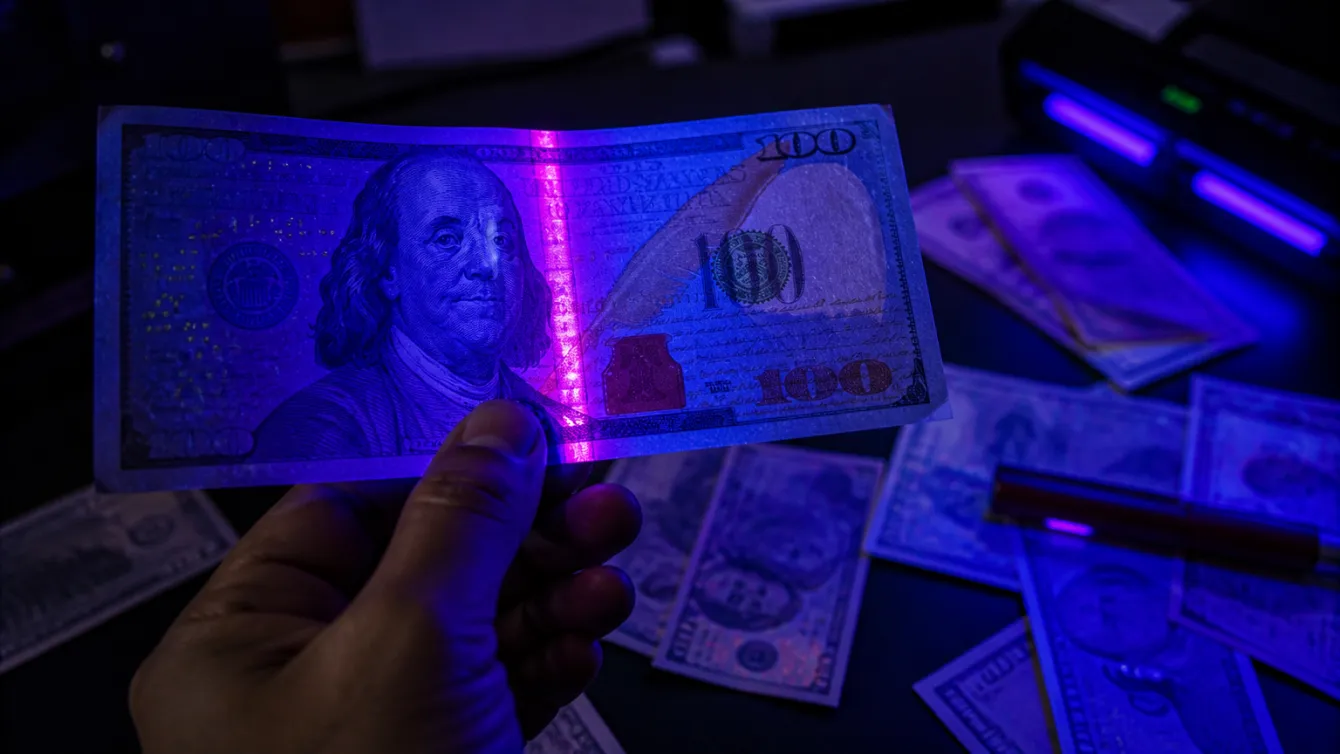
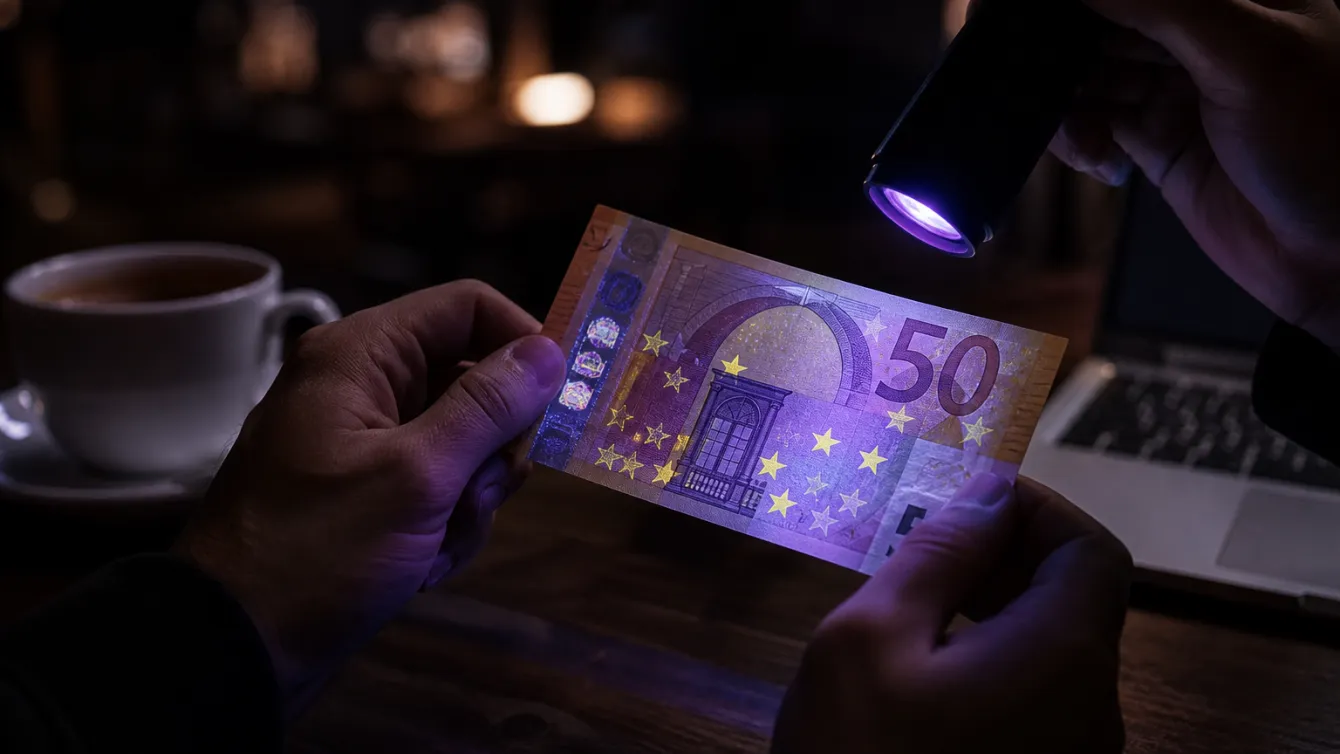
For a thorough inspection, consider utilizing UV light or magnifying tools. UV light can reveal hidden features that are invisible to the naked eye, such as fluorescent fibers embedded in the paper. Magnifying tools can help examine the fine details of the microprinting, which is often poorly replicated in counterfeit notes.
When checking euro banknotes, always employ the recommended 'Feel, Look, Tilt' method. This combination of tactile, visual, and movement checks enhances the likelihood of identifying counterfeits effectively. If any doubts arise about the authenticity of a banknote, it is best to report it to the police rather than attempting to use it, as passing counterfeit currency is a criminal offense5.
What to Do If You Receive a Fake Euro
If a counterfeit euro banknote is detected, immediate action is necessary. First, do not attempt to pass the counterfeit note to another person, as this is considered a criminal offense. Instead, report the counterfeit to local authorities, such as the police. This step is crucial not only for your protection but also to help authorities track counterfeiting operations. In 2024, over 72,400 fake euro notes were identified, illustrating the importance of vigilance in currency exchange4.
Legal implications can arise from the possession of counterfeit currency. Depending on local laws, knowingly passing or attempting to use counterfeit notes can lead to severe penalties, including fines and imprisonment. The European Central Bank emphasizes that individuals should refrain from using suspected counterfeit notes and report them promptly5.
To report a counterfeit euro banknote, contact your local police department. In many regions, there are dedicated units handling financial crimes that can provide assistance. Additionally, the European Central Bank offers resources and guidance on how to report counterfeit currency. For example, in some countries, it may be possible to contact the national central bank, which often collaborates with law enforcement agencies on these matters.
Ensure you have all relevant information ready when reporting, such as where and when the note was received, and any details about the transaction. This information can assist authorities in their investigation.
For travelers, it's advisable to familiarize themselves with the local reporting procedures before arriving in a new country. Knowing how to act in case of encountering counterfeit notes can save time and legal trouble.
Counterfeit Detection Tools and Resources
Detecting counterfeit euro banknotes can be enhanced through various tools and resources. Commonly used tools include UV pens and counterfeit detectors. UV pens reveal invisible marks on genuine banknotes when exposed to ultraviolet light, making them a practical option for quick checks. Counterfeit detectors, which may utilize UV light or magnification, can help identify security features more effectively. Many of these devices are listed by the European Central Bank, which tests and certifies their reliability for detecting counterfeits6.
For those seeking additional resources, several online platforms and mobile applications assist in identifying fake currency. Websites from central banks often provide educational materials and guidelines on recognizing counterfeit notes. For example, the European Central Bank’s site features detailed descriptions of security elements, aiding users in their assessments. Mobile applications also exist that can scan banknotes and highlight security features, making it easier for users to verify authenticity on the go.
When using these tools, it is crucial to understand the specific security features of euro banknotes. The most commonly counterfeited denominations, €20 and €50, account for around 80% of counterfeit notes withdrawn from circulation3. Therefore, focusing on these denominations when utilizing detection tools can be particularly beneficial.
Travelers and collectors should remain vigilant and equipped with detection tools, especially when exchanging currency. Familiarizing oneself with the key security features of euro banknotes, such as watermarks, holograms, and color-changing ink, can significantly aid in recognizing counterfeit notes. If a counterfeit is suspected, it is essential to report it to the police and refrain from attempting to use it, as this action carries legal implications5.
Common Myths About Fake Euros
Many individuals believe that all counterfeit euro notes are easy to spot. This myth is misleading. While some counterfeit notes are poorly made and easily recognizable, modern counterfeiting techniques have become increasingly sophisticated. In 2025, only 444,000 counterfeit euro banknotes were withdrawn from circulation, representing one of the lowest levels ever in proportion to the total banknotes in circulation, indicating that many counterfeits can evade detection3.
Another common misconception is that counterfeiters primarily target high-denomination notes. In reality, the €20 and €50 denominations account for around 80% of all counterfeit notes withdrawn, highlighting that lower denominations are also frequently counterfeited3. This suggests that travelers and consumers should be vigilant when handling any euro banknotes, regardless of their value.
Counterfeiters now employ advanced printing techniques that replicate the intricate details of authentic euro banknotes, including security features such as watermarks, holograms, and microprinting. For example, in 2024, over 72,400 fake euro notes were identified, demonstrating the ongoing challenge of detecting counterfeit currency4. The sophistication of these methods makes it essential for individuals to use proper checks, such as the 'Feel, Look, Tilt' method, to identify genuine banknotes effectively2.
The likelihood of encountering a counterfeit euro note remains low, with only 14 counterfeits detected per million genuine banknotes in circulation in 20253. However, this does not diminish the importance of being informed about the security features present in euro banknotes. Understanding how to distinguish real notes from counterfeits is crucial, as even seasoned travelers may inadvertently receive fake currency. Always remember that if a banknote is suspected of being counterfeit, it should be reported to the police rather than attempting to use it, as this is a criminal offense5.
Comparing Euro Counterfeiting to Other Currencies
Euro counterfeiting rates have shown notable trends compared to other major currencies, particularly the US Dollar. In 2025, only 444,000 counterfeit euro banknotes were withdrawn from circulation, marking one of the lowest levels in proportion to the total banknotes in circulation, with a detection rate of just 14 counterfeits per million genuine notes3. This relatively low incidence suggests effective countermeasures and security features embedded in euro banknotes.
In contrast, the US Dollar has historically faced higher counterfeiting rates. For instance, the US Secret Service reported that in recent years, counterfeit detection efforts have uncovered tens of thousands of fake dollar bills annually, with significant amounts being seized during operations. The discrepancy in counterfeiting rates can be attributed to the advanced security features of euro banknotes, such as watermarks, color-changing ink, and holograms, which are challenging for counterfeiters to replicate1.
Globally, counterfeiting trends reveal a shift in origins and methods. A six-month operation led by Europol in collaboration with authorities from 18 countries resulted in the seizure of approximately 1.2 billion euros in counterfeit currency, with over 90% of these counterfeits originating from China7. This highlights a growing international dimension to counterfeiting, where organized networks exploit technological advancements to produce sophisticated fake notes.
The most commonly counterfeited euro denominations are the €20 and €50 notes, accounting for around 80% of all counterfeit notes withdrawn3. This trend is mirrored in other currencies, where lower denominations often become targets due to their frequent circulation. It is crucial for travelers and consumers to remain vigilant, as counterfeit notes can circulate within any denomination.
Understanding these trends can aid individuals in recognizing counterfeit currencies more effectively. By employing detection methods and being aware of the security features specific to euro banknotes, users can protect themselves against potential losses from counterfeit money.
Tips for Travelers to Avoid Counterfeit Euros
Travelers in Europe should take proactive measures to handle cash safely and avoid counterfeit euros. One effective strategy is to use ATMs or banks for currency exchange, as these institutions typically provide genuine banknotes. ATMs often dispense notes that have undergone verification processes, reducing the likelihood of receiving counterfeit currency. When withdrawing cash, choose machines located in well-lit, secure areas, preferably within bank branches, to minimize risks.
When handling euro banknotes, it is essential to familiarize oneself with their security features. The most commonly counterfeited denominations are the €20 and €50 notes, which account for about 80% of all counterfeit notes withdrawn from circulation3. Travelers should employ the 'Feel, Look, Tilt' method to check for authenticity. This method involves feeling the texture of the banknote, looking for visual security elements like watermarks and holograms, and tilting the note to observe color-shifting ink2. Familiarity with these features helps in recognizing genuine notes.
While the likelihood of receiving a counterfeit euro banknote remains low—only 14 counterfeits detected per million genuine notes in circulation in 20253—it is advisable to remain vigilant. If a suspicious note is encountered, reporting it to local authorities is critical, as passing counterfeit currency is a criminal offense5.
Travelers should also consider carrying a counterfeit detection tool, such as a UV light or a magnifying glass, to verify banknotes on the go. These tools can reveal hidden security features that are not immediately visible6. By following these tips and utilizing available resources, travelers can significantly reduce their chances of encountering counterfeit euros during their journeys.
Common Mistakes and Misconceptions
Assuming All Counterfeit Notes Are Easily Identifiable
Many individuals believe that all counterfeit euro banknotes are easy to spot. This is a misconception, as modern counterfeiting techniques have become increasingly sophisticated. In reality, some counterfeit notes can closely resemble genuine currency, making them difficult to detect without proper checks5.
Overlooking Lower Denominations
A common misunderstanding is that counterfeiters primarily target high-denomination notes. However, the €20 and €50 denominations account for around 80% of all counterfeit notes withdrawn from circulation3. Travelers should remain vigilant with all denominations, as lower value notes are often just as susceptible to counterfeiting.
Neglecting Security Features
Some people may not take the time to familiarize themselves with the security features present in euro banknotes, believing that they can easily identify genuine notes. In fact, euro banknotes include intricate features like watermarks, holograms, and color-changing ink, which are difficult for counterfeiters to replicate1. Understanding these elements is essential for effective detection.
Relying Solely on Visual Inspection
There is a tendency among individuals to rely only on visual inspection when checking for counterfeit notes. While this can be helpful, it is important to employ the 'Feel, Look, Tilt' method, which involves feeling the texture, looking for visual elements, and tilting the note to observe color changes2. This multi-faceted approach enhances the chances of accurately identifying counterfeit currency.
Ignoring the Importance of Detection Tools
Some travelers may underestimate the value of counterfeit detection tools, believing they are unnecessary. However, using devices like UV lights or magnifying glasses can significantly aid in verifying banknotes on the go6. These tools can reveal hidden security features that aren't immediately visible, enhancing the ability to identify counterfeits effectively.
Conclusions
Familiarize yourself with the security features of euro banknotes, including watermarks, holograms, and color-changing ink.
Use the 'Feel, Look, Tilt' method to verify the authenticity of banknotes.
Be particularly cautious with the €20 and €50 denominations, as they account for approximately 80% of counterfeit notes.
Report any suspected counterfeit currency to local authorities instead of attempting to use it, as this is a criminal offense.
Consider carrying a counterfeit detection tool for added security when handling cash.
Next, explore more about the techniques used to identify counterfeit currency in our article on Counterfeiting Currency: An Overview.
Q&A
How to tell fake money euro?
To identify fake euro banknotes, use the 'Feel, Look, Tilt' method. This involves feeling the texture of the note, looking for visual security features like watermarks and holograms, and tilting the note to observe color-changing ink. Familiarizing yourself with these characteristics is essential for effective detection.
Which currency is most counterfeited?
The euro is among the most counterfeited currencies, with the €20 and €50 denominations accounting for about 80% of all counterfeit notes withdrawn. This trend indicates that lower denominations are frequently targeted, similar to patterns observed in other currencies.
What happens if you accidentally pay with counterfeit money?
If you accidentally pay with counterfeit money, you should report it to the police immediately. Attempting to use counterfeit currency is a criminal offense, and failing to report it could lead to legal consequences.
Is there fake money that looks so real?
Yes, modern counterfeiting techniques have become increasingly sophisticated, allowing some fake euro notes to closely resemble genuine currency. This sophistication makes it essential to employ proper checks to identify counterfeit notes effectively.
What are the security features of Euro banknotes?
Euro banknotes include several security features that are difficult for counterfeiters to replicate. These features include a watermark, security thread, hologram stripe, and color-changing ink, all designed to enhance the authenticity of the notes.
How can I detect counterfeit Euros?
To detect counterfeit Euros, utilize the 'Feel, Look, Tilt' method, which involves checking the texture, visual security elements, and color-shifting ink. Additionally, consider using counterfeit detection tools like UV lights or magnifying glasses to reveal hidden features.
What should I do if I receive a fake Euro note?
If you receive a fake Euro note, report it to the police and refrain from attempting to use it, as this action carries legal implications. It is important to handle the situation properly to avoid potential legal consequences.
Footnotes
- Trainer’s Guide
- Security features - European Central Bank
- Number of counterfeit euro banknotes remains low in 2025
- How to recognise counterfeit money?... | Association of German Banks
- Anti-counterfeiting - European Central Bank
- List of successfully tested banknote authentication devices
- Officials confiscate millions of counterfeit banknotes and coins in Europe and the United States
Explore More About Euro Currency
Discover additional resources to enhance your knowledge.